
The pumping problem in acid pickling: what you need to get right
The pumping problem in acid pickling: what you need to get right
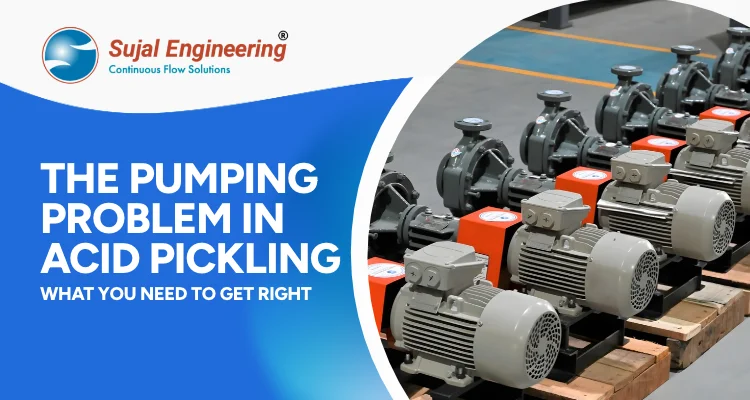
The right pump for acid pickling matches every wetted part and sealing component to the actual acid, concentration and temperature, while meeting the required flow, head and suction conditions. Material and sealing mismatches can cause premature failure, alongside hydraulic problems, dry running, solids wear and installation faults. This guide covers what to check before you specify a pump for a pickling tank, a rinse circuit or an effluent neutralisation line.
Sujal Engineering, operating under the Sujal Pumps brand, manufactures industrial pumps in Ahmedabad. Sujal figures below come from its published product pages. Your own duty data always decides the final selection.
Key takeaways
- Match the pump to your exact acid, its strength and your bath temperature. A material name alone does not prove compatibility.
- Assess acid composition, concentration and temperature together. Sujal’s SPP/SPPL polypropylene series is published up to 80°C, while SPVDF is published for 120°C continuous and 150°C intermittent service, subject to configuration and fluid compatibility.
- Seals, O-rings and gaskets can fail even when the casing remains sound. Specify their materials as carefully as the wetted body.
- For a given acid composition, higher temperature raises vapour pressure and reduces available suction head. Check NPSH and the required margin at operating temperature.
- Dissolved iron salts change liquor density, while suspended scale fines can cause abrasive wear. Give your supplier the worst-case operating liquor data.
- A catalogue maximum is not a duty point. Final selection needs your flow, head and a pump curve.
Need help choosing materials for your pickling pump?
Share your acid composition, concentration, bath temperature and solids content with Sujal Engineering to discuss suitable wetted materials and sealing options.
Discuss materialsWhat makes acid pickling a hard duty for pumps?
Acid pickling removes oxide scale from steel, commonly using hydrochloric or sulphuric acid for carbon steel. Stainless steel pickling may use different acid mixtures. Pickling commonly precedes galvanising, plating, wire drawing or cold rolling. A pump in this duty faces several stresses at once:
- Corrosive liquid in the casing, impeller, shaft area and seal chamber
- Heated baths held at a set temperature for process control
- Acid fumes that attack the motor, baseplate, fasteners and bearing housing from outside
- Dissolved iron salts that change the liquor density as the bath is used
- Scale fines and sludge, especially in rinse and spent-acid circuits
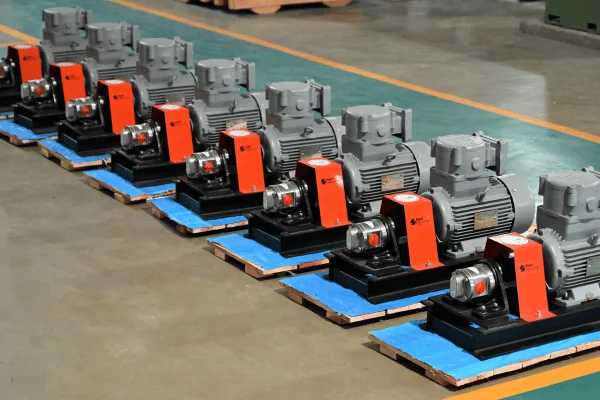
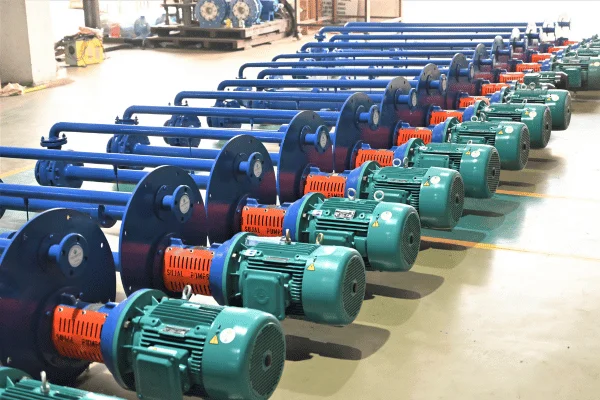
Sujal lists pickling and electroplating solution circulation among the applications for its SPVDF and SPP/SPPL series.
How do you choose between polypropylene, PVDF and alloy pumps?
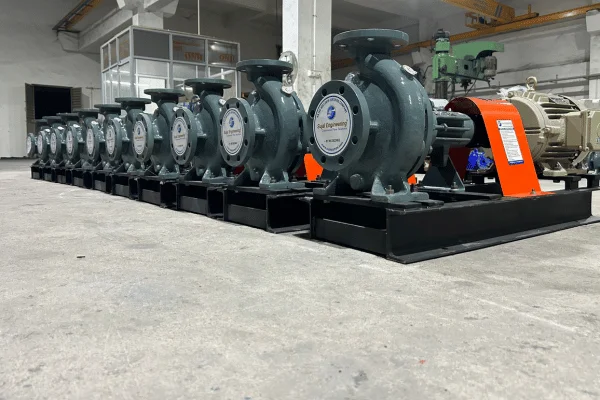
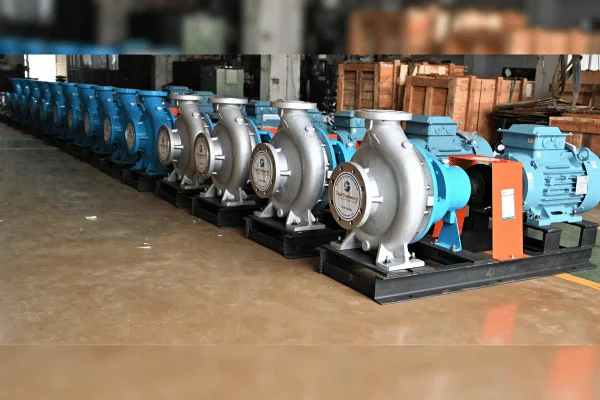
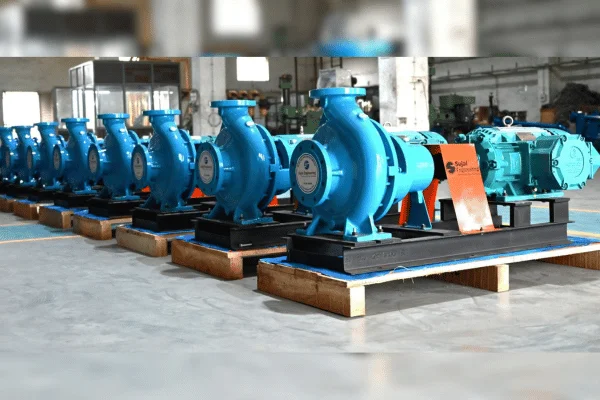
Assess the acid composition, concentration and operating temperature together, then check pressure, solids and mechanical requirements. Polypropylene (PP) is a candidate for compatible lower-temperature liquors. PVDF (polyvinylidene fluoride, a fluoropolymer) offers a higher published temperature range in Sujal’s SPVDF series. Metallic alloys may be considered where the chemistry or mechanical requirements favour them, but are not automatically a higher-pressure option.
|
Option |
Potential fit |
Selection checks |
Sujal series and published temperature |
|
Polypropylene |
Compatible cooler pickling liquors, rinses and effluent |
Acid composition, concentration, temperature and solids |
SPP/SPPL: up to 80°C |
|
PVDF |
Compatible heated acid circulation and transfer |
Chemical mixture, pressure, seals and abrasive solids |
SPVDF: 120°C continuous; 150°C intermittent |
|
Metallic alloys |
Duties favouring an alloy for chemistry or mechanical requirements |
Exact alloy grade, corrosion data and model pressure rating |
SCP: up to 300°C; listed options include SS 316, Alloy 20 and Hastelloy B or C |
These are published series-level temperature limits, not confirmation of suitability for every acid or configuration. Confirm flow, head, shaft power and NPSHR using the applicable performance curves. Verify permissible temperature, working pressure and chemical compatibility using the selected configuration’s technical documentation. The SPP/SPPL material table lists polypropylene and PVDF, while SPVDF lists PVDF, so confirm the exact wetted construction at enquiry.
Do not select stainless steel from pH alone. Common grades such as 304 and 316 are generally unsuitable for hydrochloric-acid pickling, including conditions less severe than strong, hot acid. Other acids require separate assessment. Oxidising contaminants such as ferric ions can also change alloy corrosion behaviour. Mixed acid baths used on stainless steel need chemical-specific confirmation before any material is chosen.
Why can seals and O-rings fail even when the casing remains sound?
The shaft seal is a critical potential leakage point. Incompatible acid can attack exposed seal faces, metallic components and elastomers (rubber-like sealing materials), even when the casing remains sound. Leakage can damage adjacent components and the baseplate. Check these points:
- Seal type: The SPVDF page lists a PTFE bellow mechanical seal or gland packing, depending on service. Confirm the complete seal arrangement, wetted materials and leakage-control requirements for the actual acid duty.
- Sealing materials: Confirm elastomeric seals such as FKM or EPDM, and PTFE components, against the acid, concentration and temperature. PTFE is a fluoroplastic, not an elastomer; its sealing design requirements differ from those of rubber seals.
- Shaft protection: The SPVDF page lists an EN-8 or SS 316 shaft with ceramic sleeve protection. Confirm the sleeve material, sealing details and complete shaft-isolation arrangement for the selected configuration.
- Dry running: Do not assume the pump or mechanical seal can run dry. Confirm restrictions in the operating manual and provide suitable low-level or dry-running protection.
Why does hot acid cause cavitation?
Cavitation occurs when local pressure falls below the liquid’s vapour pressure, often near the impeller inlet. Vapour bubbles form and then collapse in higher-pressure regions, potentially damaging the impeller. For a given acid composition, vapour pressure rises with temperature, reducing NPSHA when other suction conditions remain unchanged.
NPSHA (net positive suction head available) is the absolute total suction head above the liquid’s vapour-pressure head at the pump inlet. It must exceed the manufacturer’s NPSHR (net positive suction head required) by an appropriate margin throughout the operating range. Confirm the margin with the supplier at maximum liquid temperature and minimum tank level. In a pickling tank, that has practical consequences:
- Prefer flooded suction where practical, and verify NPSHA for the actual suction arrangement
- Avoid long, small-bore suction lines and sharp bends
- Maintain adequate suction-intake submergence at minimum tank level, with low-level protection to limit air ingestion and dry running
- Where sludge settles, locate the intake to limit sediment pickup while maintaining adequate submergence and unobstructed flow
Does your hot-acid duty have enough suction margin?
Send your maximum liquid temperature, minimum tank level, tank pressure, suction-piping details and required flow to Sujal Engineering for a review of your pump’s suction requirements.
Discuss materialsWhat do dissolved iron and solids do to a pickling pump?
As steel is pickled, dissolved iron salts change the liquor’s specific gravity (density relative to water). At the same flow, head and efficiency, a denser liquid requires more shaft power. Size the motor for the worst-case density and absorbed power across the intended operating range. Also provide viscosity at operating temperature, because it can affect centrifugal pump performance.
Scale fines and sludge can cause abrasive wear; dissolved iron is not itself an abrasive particle. Both the SPVDF and SPP/SPPL pages list a semi-open impeller, but this does not establish a particular solids-handling limit. State particle size, concentration and hardness. Neutralised sludge feeding a filter press is a separate duty: evaluate a suitable filter press pump against slurry properties and the required filtration pressure and flow profile.
Explore Sujal’s PVDF pumps and polypropylene pumps, or review its pump projects for examples of supplied equipment.
How do you specify a pump for an acid pickling line?
Collect this data before you request a quotation:
- Acid type and concentration range, fresh and spent
- Bath temperature: normal, maximum and during upsets
- Dissolved iron or salt content, specific gravity and viscosity at operating temperature
- Solids: particle size, concentration and hardness
- Flow rate and total dynamic head, expressed in metres of pumped liquid and accounting for elevation, pressure differences and system losses, plus suction arrangement and tank level range
- Preferred material (PP, PVDF or alloy), if known, plus seal arrangement and sealing materials for supplier review
- Motor details, duty cycle, quantity and any hazardous-area requirement
Then ask for performance curves covering your duty point and intended operating range, including power and NPSHR. Confirm material compatibility and pressure–temperature limits separately. Do not pick a model from its maximum flow and maximum head alone.
What are the most common pickling pump mistakes?
- Choosing by acid name only, and ignoring strength and temperature
- Selecting from catalogue maximums instead of a duty point
- Sizing the motor on fresh acid density
- Checking the casing material but not the seal, O-rings and gaskets
- Ignoring fume exposure on the motor, fasteners and baseplate
- Running without low-level protection
What maintenance keeps a pickling pump running?
Watch for seal leakage, rising vibration and cavitation noise. Before dismantling, isolate and lock out the pump, allow it to cool, depressurise, drain and decontaminate it under the site’s approved procedure and manufacturer’s instructions. Keep suitable seals, O-rings, gaskets, shaft sleeves and bearings in stock. Sujal’s guide to essential pump spares every plant should stock shows how to build that list.
Do pickling pumps need CE, ATEX or ISO documentation?
Management-system certification and equipment conformity documentation serve different purposes. Ask for the documents applicable to the supplied pump set and destination market. Sujal’s website presents ISO, CE, ATEX, ISO 14001:2015 and ISO 45001 credentials; these do not by themselves confirm the scope for a particular pump. Common hydrochloric- and sulphuric-acid pickling reactions with steel can release hydrogen. If an area is classified as hazardous, specify the full pump-set requirement, including the pump, motor and electrical accessories. Confirm the applicable documentation and inspection scope for each order.
Ready to specify a pump for your pickling line?
Share your fluid properties, flow, head, suction conditions and documentation requirements with Sujal Engineering to request a customised quotation for your acid-handling duty.
Request quotationConclusion
Selecting a pump for acid pickling requires assessing the acid type, concentration and temperature together. Check chemical compatibility and temperature and pressure limits for PP, PVDF and alloy options, including seals, O-rings and gaskets. Verify NPSHA and the required margin at maximum operating temperature and minimum tank level. Size the motor for the densest expected liquor and specify the solids content. Providing complete duty data helps the supplier confirm hydraulic performance, materials, seals and operating limits.
Frequently asked questions
What type of pump is best for acid pickling?
It depends on the acid, concentration, temperature, solids and hydraulic duty. PP or PVDF centrifugal pumps may suit compatible liquors. Metallic alloy alternatives require separate chemical, pressure and temperature checks.
Can a stainless steel pump handle hydrochloric acid pickling?
Common stainless steels such as 304 and 316 are generally unsuitable for hydrochloric-acid pickling. Select any metallic alternative using corrosion data for the actual acid concentration, temperature and contaminants.
What is the difference between PP and PVDF pumps for acid?
PP and PVDF have different chemical resistance and temperature capabilities. Sujal publishes up to 80°C for SPP/SPPL, and 120°C continuous or 150°C intermittent service for SPVDF, subject to the selected configuration and fluid.
Why do pickling pump seals fail early?
Incompatible materials, abrasive solids, dry running and mechanical problems can cause early seal failure. Confirm the complete seal arrangement and materials, and provide suitable low-level or dry-running protection.
How does acid temperature affect NPSH?
For the same acid composition and otherwise unchanged suction conditions, higher temperature raises vapour pressure and lowers NPSHA. Confirm an appropriate margin above NPSHR at maximum temperature and minimum tank level.
What information is needed for a pickling pump quotation?
Send acid composition and concentration, temperature, density, viscosity, dissolved iron and solids data, flow, head, suction conditions, and motor requirements. Include preferred materials and seals if already identified.
Can Sujal Engineering customise pumps for acid duty?
Sujal offers standard and customised pumps with extensive material options. Share your duty data and the team will review it for a confirmed selection.
Does Sujal Engineering export acid-handling pumps?
Yes. Sujal Engineering states that it serves customers in 40+ countries. Share your destination and requirement through the contact page.
Read more
How PVDF Lined Pumps Reduce the Risk of Chemical Leaks
Industrial Pumps for Fertilizer & Pesticide Processing: What You Need to Know
How Filter Press Pumps Handle Rising Pressure During Filtration Cycles