
One Industry, Many Processes: The Pumps Behind Sugar & Starch Production
One Industry, Many Processes: The Pumps Behind Sugar & Starch Production
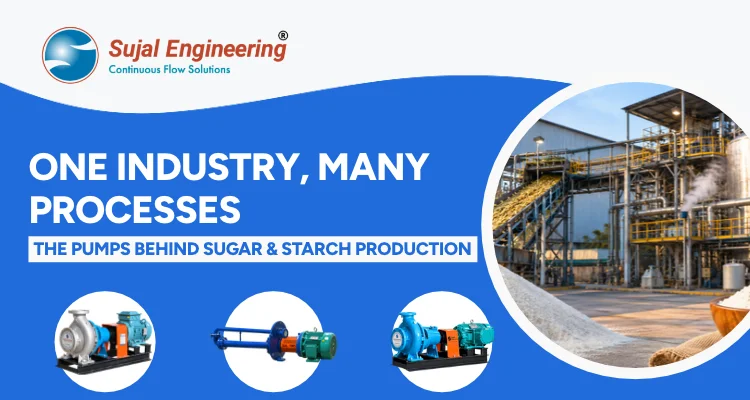
Sugar and starch plants handle fluids with very different properties, from fibrous juice and starch suspensions to concentrated syrup, molasses and filter mud. Match each pump to its actual fluid and duty. Centrifugal pumps are candidates for free-flowing streams, gear pumps for suitable viscous liquids, and solids-handling pumps for muddy or abrasive duties. The filtration arrangement also determines whether a filter press feed pump is appropriate.
This guide maps each stage to the pump principle worth investigating, so you can brief a manufacturer with the right data.
Key takeaways
- Choose a pump by the fluid condition at each stage, rather than the name of the plant.
- Centrifugal pumps may suit thin juice, water and starch suspensions. Gear pumps are candidates for compatible syrup and molasses, subject to viscosity, solids and inlet conditions.
- Molasses viscosity changes with temperature. Confirm heating requirements, pump speed, inlet feeding and overpressure protection together.
- Grit can cause abrasive wear, while fibre and other solids can obstruct flow or damage seals. Specify particle properties and the complete wetted construction.
- Published maximum flow and head are not one duty point. Final selection needs the applicable performance data and actual operating conditions.
Not sure which pump suits your sugar or starch process?
Share your process stage, fluid properties, required flow and head with Sujal Engineering to discuss a suitable pump type and configuration.
Discuss requirementsWhy do sugar and starch plants need different pumps
Both industries involve wet processes where the liquid changes character along the line. A pump suitable for thin cane juice may not suit final molasses. Equipment selected for a clean starch suspension may need a different configuration when fibre or grit is present.
Viscosity, solids and temperature drive these differences. Viscosity is a liquid’s resistance to flow. Hard particles can cause abrasion, while fibrous or sticky solids can cause blockage. Temperature affects viscosity, vapour pressure and seal performance.
Both industries also generate wet solids requiring separation and effluent requiring transfer. Pump selection must account for the actual operating cycle, including startup, continuous running and cleaning where applicable.
Which pumps are used in sugar production
Sugar mills move juice, syrup, massecuite (a mixture of sugar crystals and mother liquor), molasses, mud and condensate. Each stream needs its own assessment.
What pump handles cane juice and clarification
Raw juice carries fibre and grit. Clarified juice contains fewer suspended solids and is commonly handled hot. Its pH depends on the clarification process, which may include liming to bring naturally acidic raw juice towards neutral conditions. Specify the actual pH and temperature.
A centrifugal pump is a common starting point. Open or semi-open impeller configurations may help with solids-bearing streams, but fibre length, passage size and clogging tendency must be checked. Cleaner clarified juice may suit a different impeller configuration.
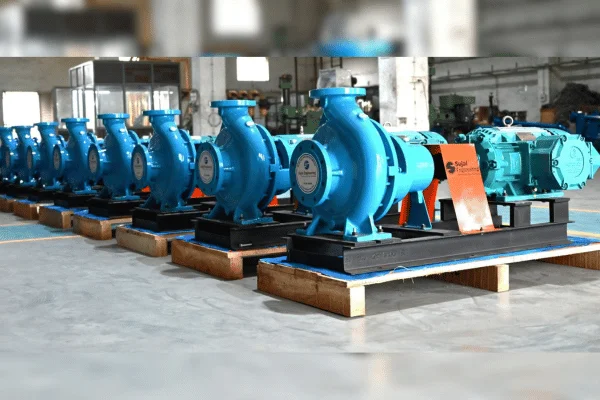
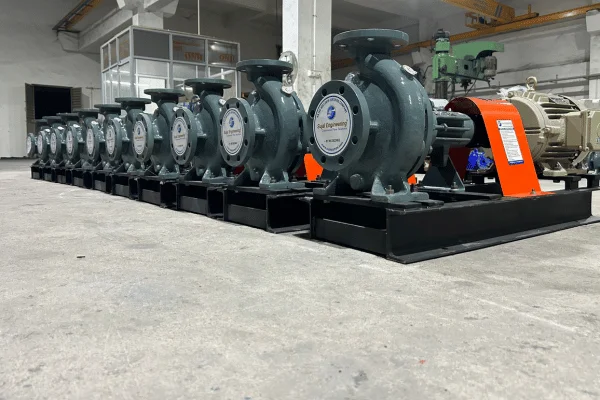
The SCPP Series centrifugal process pump offers closed and semi-open impeller options, single or double mechanical seals and a back pull-out design. Back pull-out construction allows removal of the rotating assembly without disturbing the suction and discharge piping, subject to the installed arrangement and maintenance clearance.
Which pump moves filter mud and filtrate
Clarifier mud may feed rotary vacuum filters, filter presses or other separation equipment. These duties have different pressure and flow requirements. In a rotary vacuum filter, vacuum provides the filtration pressure difference; rising pump discharge pressure is not a universal feature of mud filtration.
Where a filter press is installed, evaluate the feed pump against the required pressure–flow profile as cake resistance increases. The SFP Series side suction filter press pump is a centrifugal design with a semi-open impeller intended for filter press feeding. The selected model must match the slurry and the complete filtration cycle.
Filtrate transfer is a separate duty. Specify its remaining solids, temperature, flow, head and suction conditions rather than automatically selecting the mud-feed pump type.
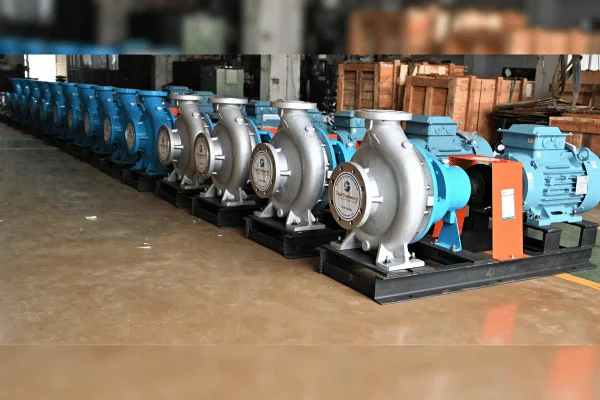
For gritty, abrasive streams, the SSTP Series horizontal slurry transfer pump offers wear-resistant material options and a two-part casing, allowing replacement of a worn front cover without replacing the whole casing.
Which pump suits syrup and molasses
Positive displacement gear pumps are candidates for compatible viscous syrup and molasses. In an external gear pump, liquid travels in cavities between the gear teeth and casing. When the teeth mesh at the discharge side, they force liquid into the outlet.
Actual delivery depends on speed, internal leakage and adequate inlet filling. Higher viscosity can reduce internal leakage but also increase suction losses and power demand. Steady flow cannot be assumed across an unlimited viscosity range.
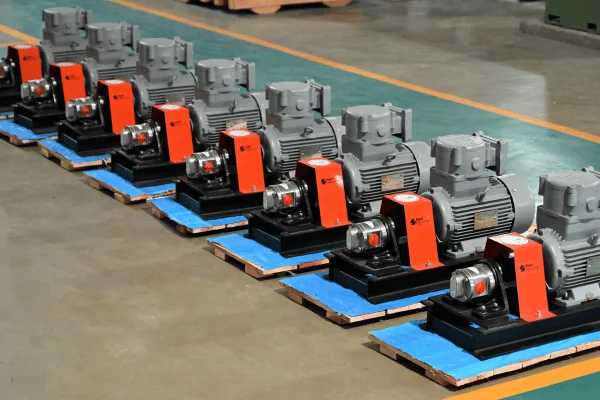
The SGRB Series double helical flange type gear pump lists molasses, sugar syrup and glucose among its applications. Jacketed and non-jacketed versions are available, with steam or hot-oil connections on the jacketed model. The SGP rotary gear pump and stainless steel SGPSS series have lower published maximum flow ranges; suitability still requires model-specific review.
Why does massecuite need separate assessment
Crystal-bearing massecuite requires assessment of crystal size, concentration, abrasion, shear sensitivity, viscosity and inlet feeding. A standard gear-pump recommendation for syrup does not establish suitability for massecuite.
Review a purpose-selected, low-speed positive displacement configuration that preserves the crystals and meets the actual duty. Share the crystal and rheology data with the manufacturer before selecting a pump.
Which pumps are used in starch production
Starch processing differs by feedstock. Maize wet milling includes steeping, milling and separation of germ, fibre and gluten. Potato and cassava processing typically involves washing, size reduction, fibre separation and starch washing.
- Raw material preparation: Match pumps to the actual feedstock route and the solids, fibre and grit present.
- Separation and washing: Screens, hydrocyclones and centrifuges need the flow and feed pressure specified by the equipment supplier. Stable delivery helps maintain separation performance.
- Dewatering: Distinguish slurry feeding from filtrate or wash-water transfer. Select for the separator’s requirements and the actual solids concentration.
- Syrup production: Viscosity changes through gelatinisation, liquefaction, saccharification and concentration. Enzymatic liquefaction reduces viscosity, while later concentration can produce a highly viscous syrup.
Centrifugal pumps may suit pumpable starch suspensions and wash water. More concentrated or gelatinised streams need separate viscosity and rheology assessment. Gear pumps may suit compatible concentrated glucose syrup, subject to solids, inlet and hygiene requirements.
The SMP Series self-priming mud pump lists sugar and starch among its applications. Its page describes back pull-out construction, an impeller flow path designed for solids, and gland-packing or mechanical-seal options. These features do not establish hygienic suitability for every product-contact stream.
Sujal publishes suction lift without a foot valve up to 8 metres at mean sea level. Treat this as a published limit, not a guaranteed lift for hot juice or starch slurry. Actual performance depends on the model, atmospheric pressure, fluid properties, suction losses and air leakage. Follow the operating manual’s initial filling and priming requirements.
How do pump types compare across stages
Stage | Fluid condition | Main checks | Pump principle to investigate | Sujal series to review |
Raw or clarified juice | Fibre-bearing raw juice; cleaner clarified juice | Fibre, pH, temperature, seals | Centrifugal with a suitable impeller | SCPP |
Abrasive mud transfer | Slurry with grit or other solids | Solids, wear, flow and head | Slurry centrifugal | SSTP |
Filter press feed | Solids-bearing pressure-filtration feed | Complete pressure–flow cycle | SFP | |
Filtrate transfer | Liquid with process-dependent residual solids | Temperature, solids and suction | Suitable centrifugal | SCPP, subject to review |
Syrup and molasses | Viscous, temperature-sensitive liquid | Inlet filling, speed, torque and relief | Gear, where suitable | SGRB, SGP, SGPSS |
Starch suspensions and wash water | Solids and viscosity vary by stage | Rheology, solids, flow and head | Centrifugal or slurry centrifugal | SCPP, SSTP |
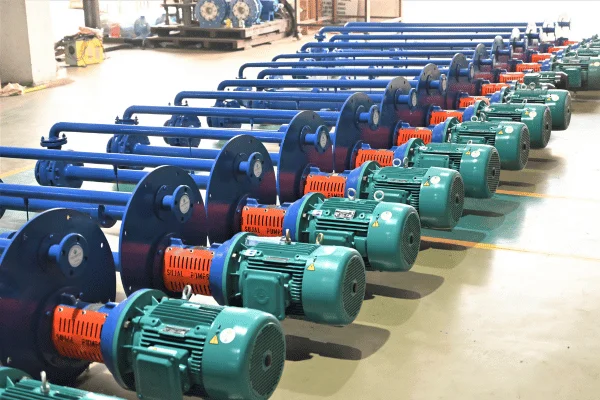
Pits, drains and effluent | Variable level and solids | Priming, submergence and solids | Self-priming or sump | SMP, SVSP |
These are general selection pointers. Confirm the chosen model, materials, seals and any food-contact requirements for the actual stream. The table does not recommend a standard gear pump for massecuite.
How do you pump molasses and thick syrup reliably
For a given molasses composition, viscosity generally falls as temperature rises. Cold startup can therefore impose greater suction losses and torque demand than normal warm operation.
- Control temperature within approved limits. Use suitable jacketing or line heating where needed, while respecting product quality, seal and equipment limits. Heating guidance for molasses should not be applied indiscriminately to native starch suspensions, which can gelatinise.
- Match speed and inlet conditions to viscosity. More viscous liquids often require lower speed, short generously sized suction piping and adequate supply head to fill the pumping cavities.
- Provide engineered overpressure protection, such as a suitably sized pressure-relief system. An ordinary bypass line alone does not establish protection against a blocked discharge. Confirm relief routing, settings and capacity with the supplier.
For a gear pump, assess displacement, speed, viscosity, differential pressure, torque and inlet requirements. Impeller trimming is a centrifugal-pump selection method and does not apply to a gear pump.
Need help specifying a molasses or syrup pump?
Send your viscosity, operating and startup temperatures, flow, differential pressure and suction details to Sujal Engineering for a review of your pumping requirements.
Review dutyWhat causes pump failure in sugar and starch plants
Pump–fluid mismatches can cause premature failure, alongside suction problems, misalignment, lubrication faults and operating errors. Symptoms can have several causes, so use the following table as an initial investigation guide.
Problem | Possible causes | What to check |
Short seal life | Solids, dry running, incompatible materials or misalignment | Seal arrangement, materials, lubrication or flush requirements and alignment |
Falling flow | Blockage, wear, suction starvation or changed viscosity | Impeller or gear condition, clearances, inlet conditions and fluid data |
Cavitation noise | Insufficient suction head above vapour pressure | NPSHA, NPSHR margin, temperature, tank pressure and suction losses |
Loss of prime | Air leakage, excessive lift or insufficient retained priming liquid | Suction joints, tank level and manual priming instructions |
Gear pump overheating | Excessive speed, viscous drag, pressure or prolonged relief recirculation | Torque, speed, temperature control, differential pressure and relief operation |
NPSHA (net positive suction head available) is the absolute total suction head above the liquid’s vapour-pressure head at the pump inlet. For centrifugal selection, confirm an appropriate margin above the manufacturer’s NPSHR (net positive suction head required) throughout the operating range. Check the worst combination of temperature, tank pressure, liquid level and flow. Rotary gear pumps also require the manufacturer’s inlet-pressure assessment at the actual viscosity and speed.
Keeping suitable critical spares on hand can shorten a stoppage. See Sujal’s guide to essential pump spares every plant should stock.
Request a customised quote or technical datasheet for your sugar or starch duty.
What information should you send for pump selection
Send the operating data that determines hydraulic performance, construction and drive requirements:
- Fluid, process stage and Brix or solids concentration, using the appropriate measurement for the stream
- Required flow and total dynamic head for centrifugal duties, or differential pressure for gear-pump duties
- Normal, maximum and cold-start temperatures
- Specific gravity and viscosity across the relevant temperature range, with rheology data for non-Newtonian streams
- Solids concentration, fibre length, particle size and hardness, including crystal content where present
- Suction arrangement, tank pressure, minimum liquid level, lift or flooded head, and suction piping details
- Preferred wetted materials and seals, if known, plus food-contact and cleaning requirements
- Motor supply, operating cycle and any hazardous-area classification
For centrifugal pumps, check performance curves, impeller diameter, speed, efficiency, power and NPSH. For gear pumps, check performance data for displacement, speed, viscosity, differential pressure, torque and inlet conditions, with suitable overpressure protection. Series maximums alone cannot confirm either selection.
Do food-contact and hazardous-area requirements apply
For product-contact service, specify the applicable food-contact materials, sealing, cleanability and documentation requirements. A stainless steel designation or a general food-industry application claim does not establish compliance with every hygienic standard. Ask Sujal to confirm the supplied configuration and documentation for the order.
Hazardous-area requirements may arise from flammable vapours in a distillery or ethanol unit, or from combustible sugar and starch dust in relevant processing areas. Confirm the actual gas or dust classification and the suitability of the complete pump set, including the motor and accessories. Do not assume every wet-process pump location is classified.
Sujal’s guide to industrial pumps for ethanol processing provides related context. Where a plant circulates thermal oil, the SAPP Series thermic fluid pump is a separate product path.
What should you look for in a pump manufacturer
Look for control over machining, balancing, testing and spares. Sujal Engineering’s infrastructure page lists CNC machining, impeller dynamic balancing, pump and motor alignment, positive material identification, ultrasonic testing and performance testing, plus spares for current and legacy pumps. Confirm the required inspection and documentation scope for each order.
Ready to request a pump quotation?
Share your operating data, materials, sealing and food-contact requirements with Sujal Engineering to request a customised quotation for your sugar or starch application.
Request quotationConclusion
Selecting pumps for sugar and starch production starts with understanding the fluid at each process stage. Assess centrifugal pumps for free-flowing liquids and gear pumps for suitable viscous syrup or molasses. Crystal-bearing massecuite needs separate consideration of crystal preservation and inlet conditions. Match the pumping elements, wetted materials and seals to the solids, temperature and chemistry, then verify performance across the intended operating range. Include food-contact, cleaning and hazardous-area requirements in your enquiry so the manufacturer can confirm a suitable configuration.
Frequently asked questions
What pumps are used in the sugar industry
Sugar mills use centrifugal pumps for suitable juice and water duties, solids-handling pumps for mud, and gear pumps for compatible syrup or molasses. Filter press feed, vacuum-filter mud transfer and filtrate transfer require separate assessments.
Which pump is best for molasses
A gear pump is a candidate for compatible molasses, but selection depends on viscosity, temperature, inlet conditions, pressure and solids. Controlled heating or jacketing may help, subject to product and equipment limits.
Can one pump handle all sugar mill duties
One pump configuration should not be assumed suitable for every stream. Viscosity, solids, temperature and process requirements change along the line, so assess each duty separately.
Which pumps are used in starch manufacturing
Centrifugal or slurry pumps may handle pumpable starch suspensions and wash water. Concentrated, gelatinised or crystal-bearing streams need separate assessment; gear pumps may suit compatible concentrated glucose syrup.
Why do pumps wear quickly in starch and sugar plants
Grit and other hard particles can abrade casings, impellers and seals. Fibre may obstruct passages or damage seals. Confirm particle properties, wetted materials, passage sizes and seal arrangements for the actual stream.
How does viscosity affect pump selection
Higher viscosity can reduce centrifugal performance and increase gear-pump inlet losses and power demand. Provide viscosity across operating and cold-start conditions; confirm the pump type, speed and inlet arrangement with the supplier.
Do sugar and starch pumps need food-grade certification
Specify the food-contact and hygiene requirements applicable to the product stream and destination market. Confirm materials, seals, cleanability and supporting documentation for the supplied configuration rather than relying on a general “food-grade” label.
What data does a manufacturer need for a quotation
Send fluid composition, flow, head or differential pressure, temperature, density, viscosity, solids and crystal data, suction conditions, materials, cleaning requirements and motor details. Include the operating cycle and any hazardous-area classification.
Read more
Industrial Pumps for Ethanol Processing: Improving Efficiency and Reliability
How Filter Press Pumps Handle Rising Pressure During Filtration Cycles
Don’t Wait for a Breakdown: Essential Pump Spares Every Plant Should Stock