
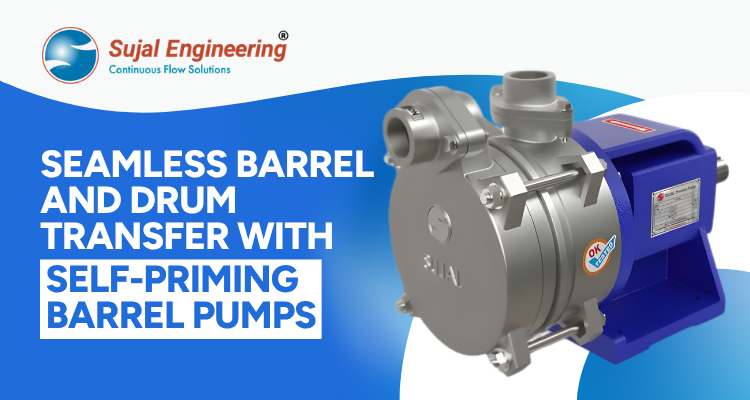
Seamless Barrel and Drum Transfer with Self-Priming Barrel Pumps
What Is a Self-Priming Barrel Pump and Why Does It Matter?
Moving liquids from barrels and drums sounds simple. But anyone who has managed a factory floor knows the reality: spills, slow transfer speeds, chemical exposure risks, and pumps that lose prime mid-operation. These are not minor inconveniences. They are safety hazards and productivity killers.
A self-priming barrel pump solves all of this. It draws liquid upward from a drum or barrel without needing to be manually filled before each use. The pump re-primes itself automatically, even when air enters the suction line. The result is faster, safer, and cleaner fluid transfer across industries like chemicals, pharmaceuticals, food processing, oil and gas, and textiles.
Sujal Engineering has been manufacturing industrial barrel pumps and drum transfer pumps for clients across India and globally, delivering solutions that handle everything from water-thin solvents to highly viscous oils.
Key Takeaways
- Self-Priming Design: A self-priming barrel pump does not need manual priming before each use, making it ideal for continuous industrial operations.
- Spill-Free Transfer: Properly fitted barrel pumps create a closed transfer system that eliminates spills and reduces chemical exposure risk.
- Wide Industry Application: These pumps are used in chemical, pharmaceutical, food and beverage, oil and gas, textile, and paper industries.
- Viscous Liquid Compatibility: Drum pumps for viscous liquids are available in gear-driven and diaphragm designs to handle thick fluids efficiently.
- Material Options Matter: Pump materials like stainless steel determine chemical compatibility and service life.
- Portability Is a Feature: Portable barrel pumps allow one operator to transfer fluids from multiple drums without fixed piping infrastructure.
- Maintenance Is Simple: Regular dry-run protection, seal inspection, and suction tube cleaning keep drum transfer pumps running efficiently.
- Cost of Inaction Is High: Manual scooping or gravity-fed transfer wastes time, increases spill risk, and raises labor costs significantly.
What Problems Does a Drum Transfer Pump Actually Solve?
Before choosing a pump, it helps to understand what happens without one.
Facilities that rely on manual bucket transfer or tilting drums deal with constant product loss, floor contamination, and operator fatigue. In chemical environments, liquid contact with skin or eyes is a serious occupational hazard. In food-grade environments, open-air transfers can introduce contamination risk.
A drum transfer pump eliminates all of these problems by creating a sealed, controlled flow path from the drum to the destination. The operator inserts the suction tube into the drum, activates the pump, and fluid transfers directly through a discharge hose into the receiving vessel.
The self-priming mechanism is what makes this practical. Unlike standard centrifugal pumps that need a flooded suction, a self-priming barrel pump creates a vacuum at the inlet and pulls fluid up the suction tube, even when the drum is only partially filled.
How Does a Self-Priming Barrel Pump Work?
The operating principle is straightforward. The pump housing retains a small amount of liquid after each use. When the pump restarts, this retained liquid mixes with air in the casing and creates a partial vacuum at the inlet. This vacuum draw fluid up the suction tube from inside the drum.
Once the pump reaches full prime, it operates like a standard centrifugal or gear pump, delivering consistent flow until the drum is emptied or the pump is switched off.
This design means operators do not need to manually fill the pump before each cycle. In high-volume facilities where dozens of drums are transferred daily, this time saving adds significantly.
Which Industries Use Industrial Barrel Pumps Most?
Industrial barrel pumps serve virtually every sector that handles bulk liquids in drum or IBC format. Here is a quick breakdown by industry:
Chemical and Petrochemical: Transfer of acids, alkalis, solvents, and process chemicals from storage drums to reactors or mixing tanks.
Pharmaceutical: Sterile or semi-sterile liquid transfers where contamination control is non-negotiable. Stainless steel pumps with sanitary fittings are preferred.
Food and Beverage: Edible oils, syrups, flavoring agents, and liquid additives stored in food-grade drums require pumps with FDA-compliant wet parts.
Oil and Gas: Lubricants, hydraulic fluids, fuel additives, and crude fractions need pumps rated for high-viscosity and sometimes flammable media.
Textile and Dyeing: Dye solutions, auxiliaries, and chemical fixatives are transferred frequently in textile plants. Accurate dosing and spill prevention are top priorities.
Paper and Pulp: Bleaching agents, coating chemicals, and process liquids move through drum pumps as part of routine batch processing.
Agriculture: Pesticide concentrates, fertilizer solutions, and crop protection chemicals are loaded and transferred using portable barrel pumps in the field and at processing facilities.
What Types of Barrel Pumps Are Available for Industrial Use?
Not all drum transfer pumps are the same. The right choice depends on fluid viscosity, chemical compatibility, required flow rate, and power source availability.
Comparison Table 1: Types of Barrel Pumps by Drive Mechanism
| Pump Type | Best For | Typical Flow Rate | Power Source |
| Electric Drum Pump | High-volume continuous transfer | 20 to 200 LPM | Electric motor |
| Air Operated Diaphragm Pump | Flammable or hazardous liquids | 10 to 150 LPM | Compressed air |
| Manual Drum Transfer Pump | Low-volume or field use | 5 to 30 LPM | Hand or lever |
| Rotary Gear Pump | Viscous oils and lubricants | 10 to 120 LPM | Electric motor |
| Self-Priming Centrifugal Pump | Thin to medium viscosity fluids | 50 to 400 LPM | Electric motor |
Each drive type has a scenario where it performs best. Electric drum pumps offer the highest throughput in factory environments with stable power supply. Air operated diaphragm pumps are the preferred choice in zones where electrical sparking is a fire or explosion risk.
Not sure which barrel pump type matches your application?
Talk to our experts at sujalpumps.com and get a recommendation based on your fluid type, flow rate, and site conditions. Contact us for a free consultation
How Do You Choose the Right Material for a Barrel Transfer Pump?
Material selection is often where buyers make costly mistakes. A pump body that reacts with the transferred fluid can fail within weeks, contaminate the product, or create a safety incident.
Here is a practical guide to material selection based on fluid type:
Comparison Table 2: Pump Material vs. Fluid Compatibility
| Pump Material | Suitable Fluids | Not Suitable For |
| Stainless Steel (SS 316) | Food-grade liquids, mild chemicals, pharmaceuticals | Strong acids, chloride-heavy fluids |
| Cast Iron | Oils, lubricants, non-corrosive fluids | Any acidic or oxidizing fluid |
| Hastelloy / Alloy | Highly aggressive acids and mixed chemical streams | Not typically cost-effective for mild applications |
Sujal Engineering manufactures barrel pumps in stainless steel, covering the widest range of chemical and food-grade applications. Choosing the right material from day one avoids premature pump failure and product contamination.
What Makes a Barrel Pump Suitable for Viscous Liquids?
Standard centrifugal pumps lose efficiency rapidly as fluid viscosity increases. For thick liquids like lubricating oils, glycerin, adhesives, or heavy chemical compounds, a rotary gear pump or a dedicated drum pump for viscous liquids is the right choice.
Gear-driven barrel pumps use meshing gears to create positive displacement, pushing fluid forward regardless of viscosity. This makes them effective for oils, greases, and thick industrial chemicals that would stall or cavitate a centrifugal design.
For extremely thick fluids, progressive cavity pump designs are also available, though for most barrel transfer applications in the 100 to 5000 cP range, a rotary gear pump provides excellent results.
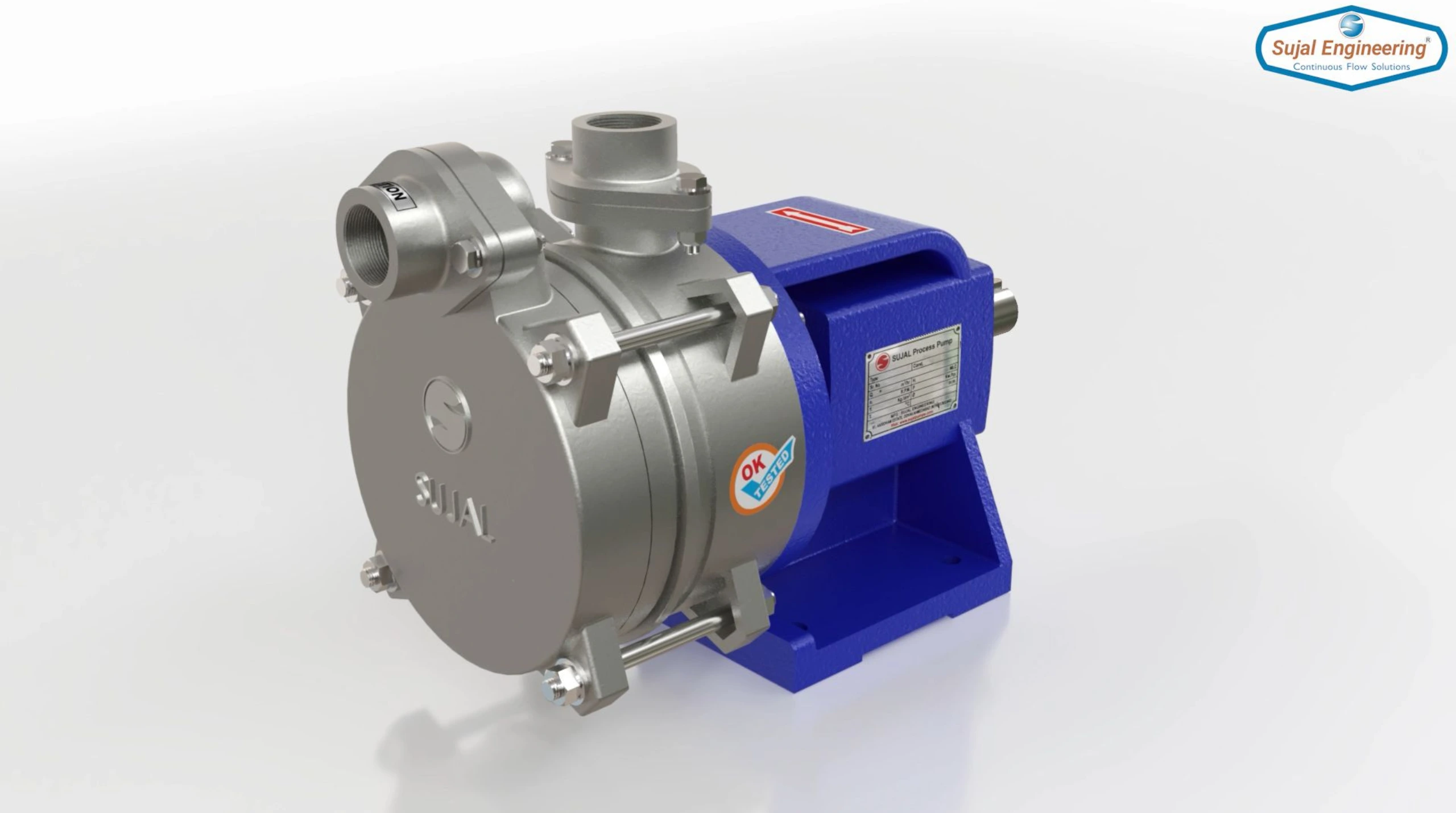
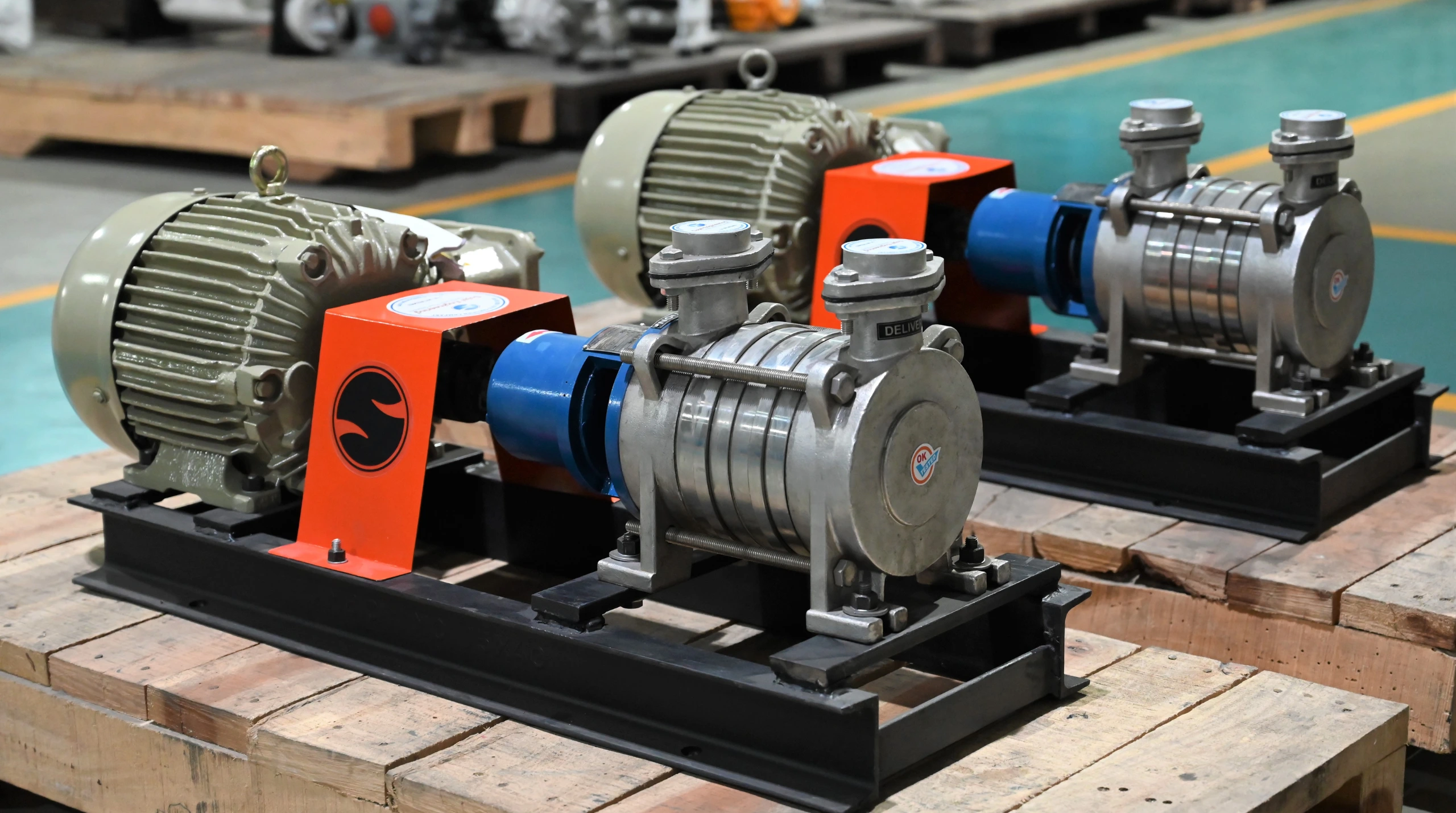
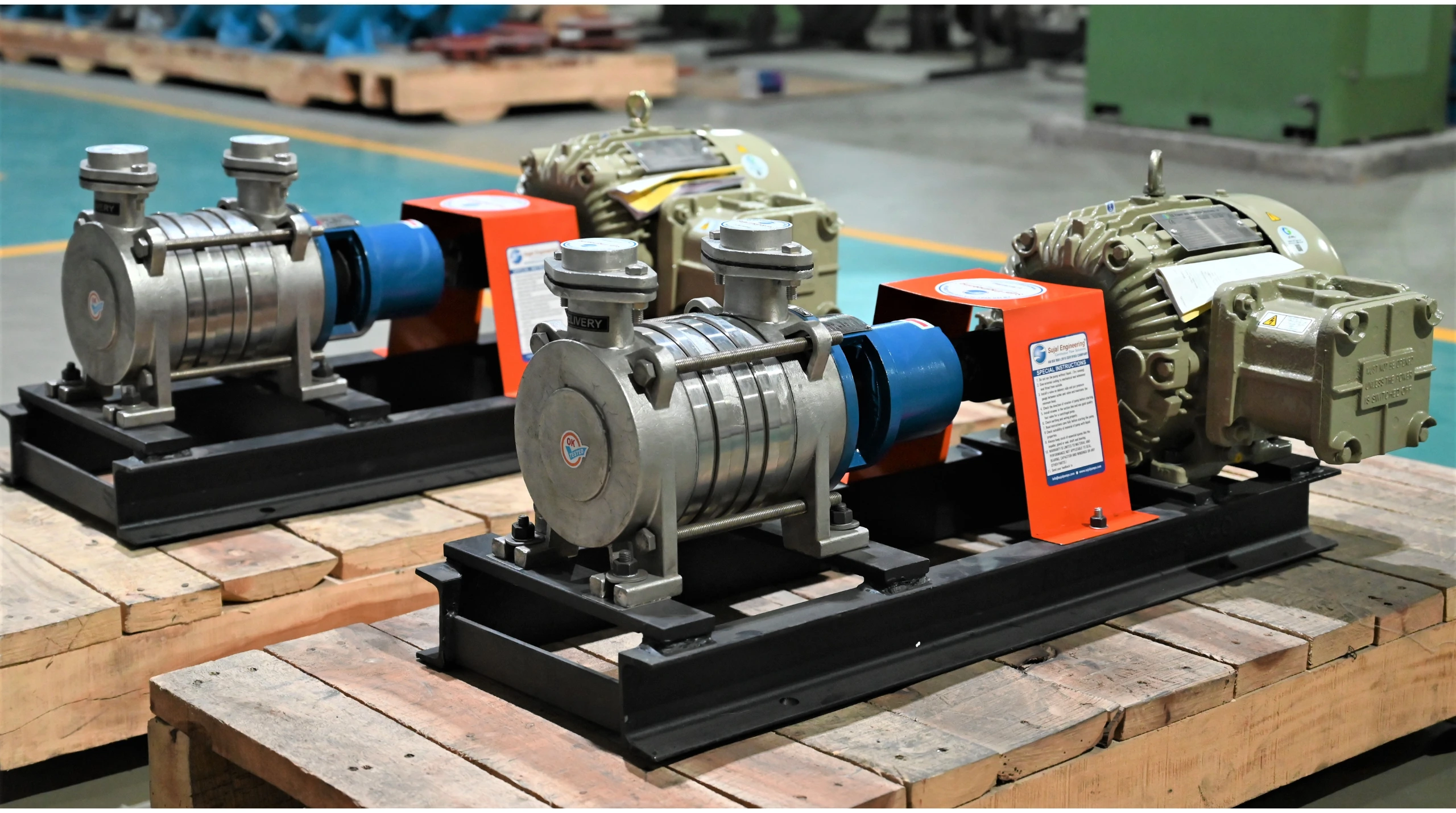
Sujal Engineering’s rotary gear pump range, including the SS Rotary Gear Pump and the Double Helical Flange Type Gear Pump, is engineered for reliable performance with viscous industrial fluids.
What Are the Key Features to Look for in a Self-Priming Drum Pump?
When evaluating a self-priming drum pump for your facility, focus on these performance and safety features:
- Self-priming depth: How far below the pump can the suction tube reach? Most industrial models handle 1 to 3 meters of suction lift.
- Dry-run protection: Pumps that run dry after the drum empties can seize or burn out. Look for models with thermal overload protection or mechanical dry-run guards.
- Adjustable tube length: Different drum depths require different suction tube lengths. Adjustable or telescoping tubes add flexibility.
- Sealed motor housing: In chemical or food environments, the motor should be sealed against fluid ingress to prevent shorting and contamination.
- Flow control valve: A simple discharge valve lets operators control transfer rate and reduce splash risk when filling small vessels.
- Quick-connect fittings: Faster drum changes improve productivity in high-volume operations.
- Certifications: For food-grade or pharmaceutical use, confirm FDA-compliant materials and, where required, ATEX rating for hazardous area use.
Handling thick oils, lubricants, or high-viscosity chemicals?
Our rotary gear pump lineup is built for this application. Visit sujalpumps.com to compare specifications and find your match. Contact us for a free consultation
How Do You Maintain a Drum Transfer Pump for Long Service Life?
A drum transfer pump that is serviced regularly lasts far longer and operates more reliably than one that is run until failure. The maintenance routine is not complicated.
After each use: Flush the pump with a compatible cleaning fluid to remove product residue. This prevents crystallization, clogging, or cross-contamination between different fluids.
Weekly: Inspect the suction tube for cracks, blockages, or chemical degradation. Check the discharge hose and fittings for leaks or wear.
Monthly: Check shaft seals and O-rings for signs of swelling, cracking, or fluid weeping. Replace any degraded seals immediately.
Every 6 months: Lubricate bearings where applicable. For gear pumps, check gear clearances and replace worn gears before they cause flow drop or vibration.
Always: Never run the pump dry for extended periods. Install a level sensor or use a flow switch to cut power when the drum empties.
What Is the Real Cost of Not Using a Proper Barrel Pump?
This is a question that does not get asked enough in procurement discussions.
Manual drum transfer using tilting cradles, scoops, or hand pumps carries real hidden costs: product spillage, cross-contamination, longer transfer times, higher labor input, and operator injury risk. In chemical environments, even a small spill event can trigger an incident report, compliance review, or downtime.
A quality self-priming barrel pump typically pays for itself within the first few months of use through reduced product loss alone. In regulated industries like pharmaceuticals or food processing, the audit and compliance benefits of a documented, closed-loop fluid transfer system add further value.
The investment in the right industrial barrel pump is not a cost. It is a productivity and safety upgrade with measurable returns.
Ready to eliminate manual drum handling from your facility?
Our team at Sujal Engineering can help you select, specify, and source the right drum transfer pump for your operation. Start at sujalpumps.com. Contact us for a free consultation
Why Choose Sujal Engineering for Your Barrel and Drum Transfer Needs?
Sujal Engineering is a trusted manufacturer of industrial pump solutions serving clients across the chemical, pharmaceutical, food and beverage, oil and gas, textile, and water treatment sectors. From self-priming barrel pumps to air operated diaphragm pumps and rotary gear pumps, the product range covers virtually every barrel and drum transfer requirement.
Every pump is manufactured with attention to material compatibility, flow performance, and operational durability. Whether you need a portable barrel pump for field use, a high-flow electric drum pump for production line integration, or a PVDF pump for aggressive chemical transfer, Sujal Engineering has a solution that fits.
Our team works with factory owners, plant managers, procurement teams, and EPC contractors to match the right pump to the right application, every time. If you are ready to upgrade your drum transfer process or simply want to compare options before making a decision, we invite you to get in touch with our team at sujalpumps.com and discover why industrial buyers across India and globally trust Sujal Engineering for reliable fluid handling.
Frequently Asked Questions
What is a self-priming barrel pump used for?
A self-priming barrel pump is used to transfer liquids from drums, barrels, or IBCs to process equipment, storage tanks, or filling lines. It automatically draws fluid without needing manual priming, making it efficient for continuous industrial use.
What is the difference between a self-priming pump and a standard centrifugal pump?
A standard centrifugal pump requires a flooded suction to operate and cannot draw fluid from below its inlet. A self-priming pump retains liquid in its casing and creates a vacuum to lift fluid from below, making it practical for drum and barrel transfer.
How do I choose between an electric drum pump and an air operated drum pump?
Choose an electric drum pump for high-volume, continuous transfer in standard industrial environments. Choose an air operated diaphragm pump when working with flammable, explosive, or highly toxic fluids where electrical sparking poses a risk.
What flow rates do industrial barrel pumps typically deliver?
Flow rates vary by pump type. Manual barrel pumps deliver around 5 to 30 LPM. Electric self-priming barrel pumps typically deliver 20 to 200 LPM. Gear pumps for viscous fluids range from 10 to 120 LPM depending on viscosity and pump size.
Can one barrel pump be used for multiple fluid types?
It is possible if the fluids are compatible and the pump is thoroughly flushed between transfers. However, for hazardous chemicals or food-grade applications, dedicated pumps per fluid type are strongly recommended to prevent contamination and ensure safety compliance.
How long does a self-priming drum pump last?
With proper maintenance, a quality self-priming drum pump can last 5 to 10 years or more. Key factors include correct material selection, avoiding dry-run conditions, regular seal inspection, and prompt cleaning after each use.
Are portable barrel pumps suitable for outdoor or field use?
Yes. Portable barrel pumps powered by rechargeable batteries or compressed air are well-suited for outdoor use in agriculture, construction, and oil and gas field operations where fixed power supply is unavailable.