
Why SS Gear Pumps Are Preferred in Pharma & Specialty Chemical Plants
When precision, purity, and chemical resistance are non-negotiable, stainless steel gear pumps are the industry’s first choice and for good reason.
In pharmaceutical manufacturing and specialty chemical processing, the pump you choose isn’t just an operational decision – it’s a quality and compliance decision. One wrong material, one point of contamination, one pressure inconsistency, and an entire batch is compromised.
That’s why plant managers, process engineers, and procurement teams across regulated industries keep coming back to SS (Stainless Steel) Gear Pumps. They deliver the hygienic performance, chemical resistance, and precision flow control that these industries demand, day in and day out.
At Sujal Pumps, we’ve worked with industrial buyers across pharmaceuticals, specialty chemicals, food processing, and more – and the demand for high-quality SS gear pumps continues to grow. This guide breaks down exactly why.
What Is an SS Gear Pump, and How Does It Work?
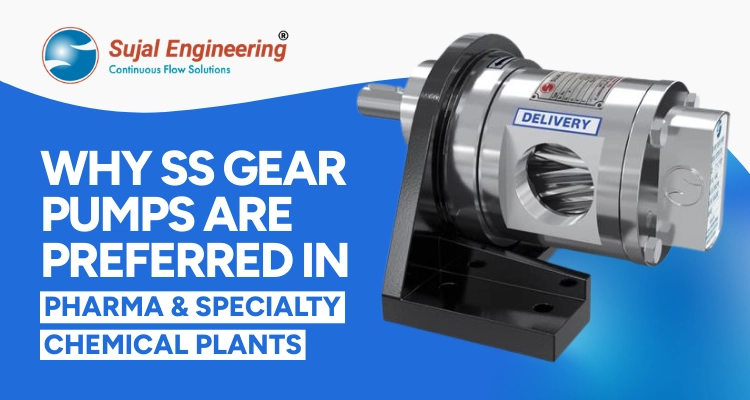
An SS Gear Pump is a type of positive displacement pump built entirely or primarily from stainless steel. It uses the intermeshing of two precision-cut gears (internal or external) to move fluid from the inlet to the outlet at a consistent, measurable flow rate.
Unlike centrifugal pumps, which depend on velocity and pressure to move fluid, a gear pump physically traps and displaces fluid with each rotation. This makes it ideal for:
- Viscous liquids that resist flow (oils, resins, syrups)
- Precise metering applications where consistent volume matters
- Shear-sensitive fluids that can’t be agitated or turbulently transferred
- High-pressure transfer in closed-loop systems
The stainless-steel construction typically SS 316 or SS 316L adds a critical layer of corrosion resistance, hygienic compliance, and material non-reactivity that standard cast iron or carbon steel pumps simply cannot offer in pharma or chemical environments.
Why Do Pharma Plants Prefer SS Gear Pumps Over Other Pump Types?
Pharmaceutical manufacturing is one of the most regulated industries on the planet. Every piece of equipment that contacts a product or process fluid must meet strict material standards for FDA compliance; GMP guidelines, and international pharmacopoeia requirements are baseline expectations, not optional upgrades.
Here’s why SS gear pumps consistently win in pharma environments:
1. Non-Reactive, Contamination-Free Fluid Handling
Stainless steel particularly SS 316L has extremely low reactivity with organic compounds, solvents, APIs (active pharmaceutical ingredients), and cleaning agents. It doesn’t leach metallic ions into the fluid stream, which is critical when you’re transferring drug intermediates or final formulations.
This makes SS gear pumps genuinely contamination-free fluid handling equipment a requirement, not a feature, in pharma production.
2. GMP and FDA Compliant Construction
Hygienic stainless steel gear pumps are designed and manufactured to comply with GMP (Good Manufacturing Practice) standards. Key design attributes include:
- Electropolished or mirror-finished internal surfaces (Ra ≤ 0.8 µm) that prevent microbial adhesion
- Zero dead-zones or crevices where fluid can pool and bacteria can multiply
- Seal materials (PTFE, EPDM) compatible with pharmaceutical-grade media
- Full traceability of materials of construction, including mill certificates for SS 316L
3. CIP and SIP Compatible Design
In pharma plants, equipment must be cleanable and sterilizable in place – without disassembly. SS gear pumps are designed for CIP (Clean-in-Place) and SIP (Sterilize-in-Place) compatibility, allowing hot water, steam, or chemical cleaning agents to flush through the pump without damaging internal components.
This dramatically reduces downtime and contamination risk compared to pumps that need to be broken down for cleaning.
4. Precision Flow Control for Metering Applications
Dosing and metering operations in pharma require exact, repeatable volume delivery. Because SS gear pumps are positive displacement by design, they deliver a fixed volume per revolution making them the go-to choice for:
- API dosing into reactors
- Excipient blending
- Filling operations
- Continuous manufacturing processes
Even minor flow variations can affect batch yield or drug concentration. The precision flow control offered by gear pumps simply can’t be matched by centrifugal alternatives in these contexts.
Why Are SS Gear Pumps the Preferred Choice in Specialty Chemical Plants?
Specialty chemical processing introduces a different set of challenges: aggressive media, extreme pH ranges, high-viscosity polymers, and flammable solvents often all in the same facility.
Here’s what makes stainless steel gear pumps the preferred workhorse in specialty chemical environments:
1. Superior Chemical Resistance
Specialty chemicals include acids, alkalis, chlorinated solvents, and reactive intermediates. SS 316/316L contains molybdenum (2–3%), which significantly enhances resistance to chloride-induced pitting and crevice corrosion – the most common failure mode in chemical processing equipment.
Whether you’re transferring acetic acid, sodium hypochlorite solutions, or organic solvents, a properly specified SS gear pump handles the job without degradation or contamination.
2. High Viscosity Liquid Transfer Without Performance Drop
Many specialty chemical products – resins, adhesives, polymer melts, and lubricants are highly viscous. Centrifugal pumps lose efficiency dramatically as viscosity increases. Gear pumps, by contrast, improve volumetric efficiency with higher-viscosity fluids because the fluid itself helps seal the gear clearances.
This makes SS gear pumps the go-to solution for high viscosity liquid transfer in coatings, polymer, and adhesive manufacturing.
3. Handling Corrosive Acids and Solvents Safely
Acid and solvent transfer is one of the highest-risk operations in a chemical plant. SS gear pumps with the right seal configuration (mechanical seals or magnetic coupling) provide leak-proof operation, protecting workers, equipment, and the environment.
Sujal Pumps’ SS Rotary Gear Pumps are specifically engineered for these demanding chemical transfer applications, with options for PTFE-lined internals and API-grade mechanical seals for maximum safety.
4. Consistent Performance at High Pressures
Many chemical processes of hydrogenation reactors, high-pressure column feeds, and autoclave charging require pumps that can sustain elevated operating pressures without slippage or flow variation. SS gear pumps are built for high-pressure operation, maintaining volumetric consistency that positive displacement design inherently guarantees.
SS Gear Pumps vs. Other Pump Types: Which Is Right for Your Application?
| Feature | SS Gear Pump | Centrifugal Pump | Diaphragm Pump | Peristaltic Pump |
| Viscous fluid handling | Excellent | Poor | Good | Good |
| Precision metering | Excellent | Poor | Good | Good |
| CIP/SIP compatible | Yes | Yes | Limited | No |
| High-pressure capability | Yes | Moderate | Moderate | Limited |
| Shear-sensitive fluids | Low shear | High shear | Low shear | Very low shear |
| Hygienic compliance | Yes (SS 316L) | Depends | Depends | Good |
| Dry run capability | No | No | Yes | Yes |
| Chemical resistance | Excellent (SS) | Material-dependent | Good | Moderate |
For pharmaceutical fluid handling and specialty chemical transfer particularly where viscosity, precision, and hygiene intersect – SS gear pumps are the most versatile and reliable option available.
What Grades of Stainless Steel Are Used in Gear Pumps, and Does It Matter?
Yes, the grade of stainless-steel matters highly in pharma and chemical applications.
SS 304 is suitable for general food-grade or mild chemical applications. It offers good corrosion resistance against most organic acids and mild chemicals.
SS 316 / SS 316L is the standard for pharmaceutical and specialty chemical applications. The addition of molybdenum gives it superior resistance to chlorides, sulfuric acid dilutions, and organic solvents. SS 316L (low carbon) is preferred when welded components are involved – it resists sensitization and carbide precipitation at weld zones, maintaining full corrosion resistance.
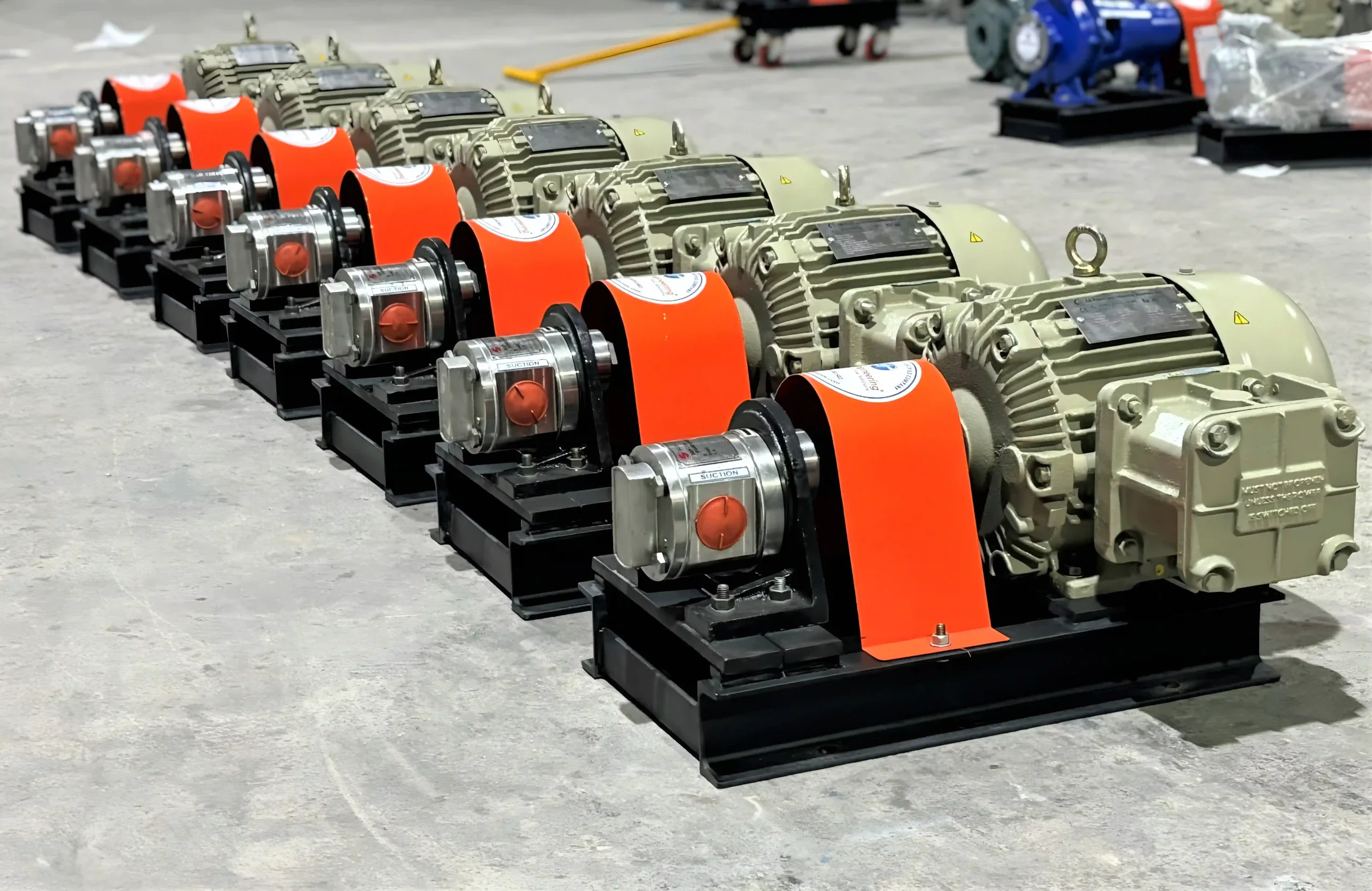
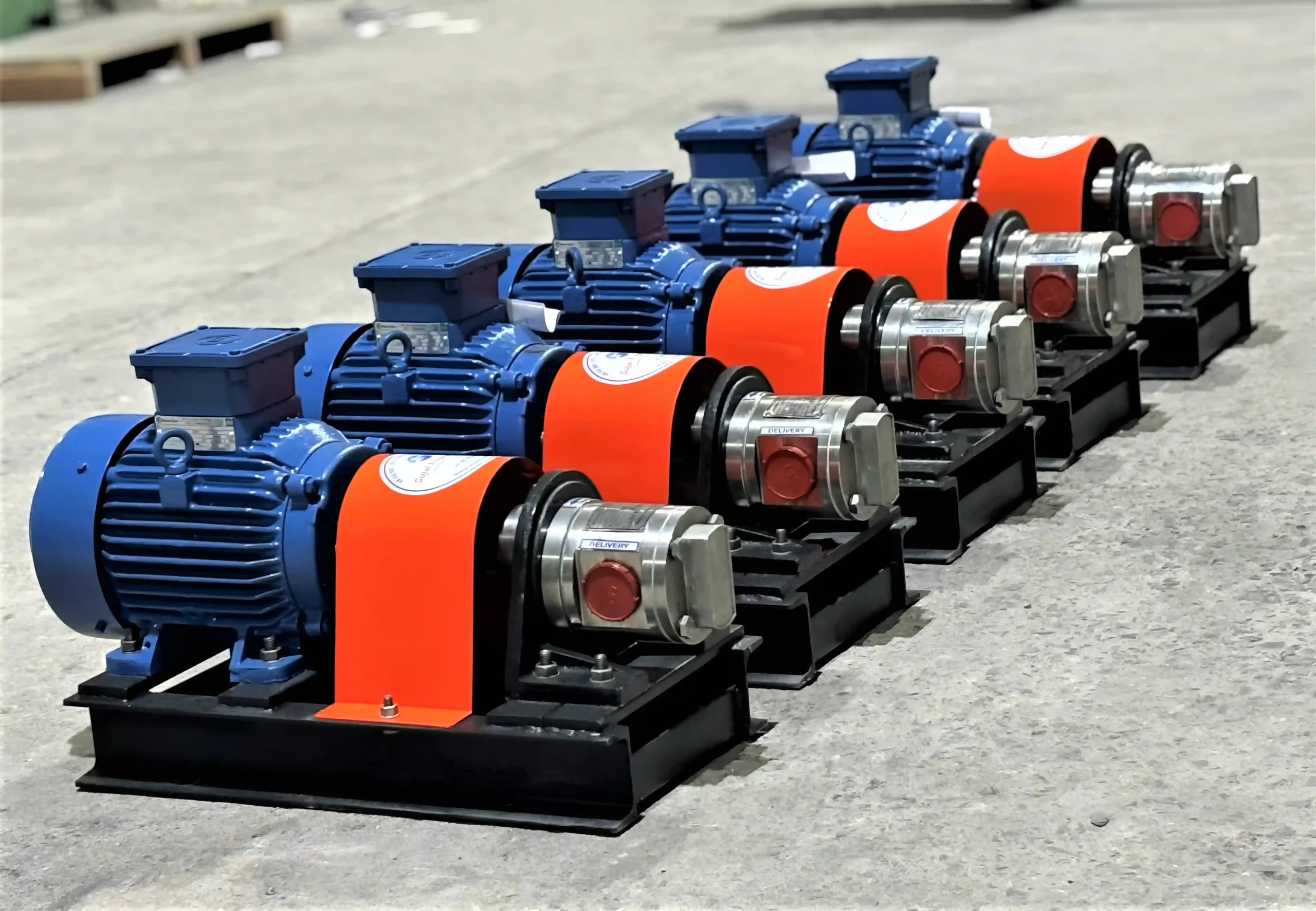
When Sujal Pumps manufactures its SS Rotary Gear Pumps and Double Helical Flange Type Gear Pumps, the material selection is engineered to the application – not just selected off a spec sheet.
Key Applications: Where SS Gear Pumps Are Doing Real Work
Pharmaceutical Manufacturing
- API transfer between reactors and holding tanks
- Solvent recovery systems
- Sterile product filling and dosing
- Fermentation broth transfer (low-shear requirement)
Specialty Chemical Plants
- Resin and polymer transfer
- Adhesive and sealant production
- Agrochemical intermediate processing
- Pigment and colorant dosing
Other Industries Where SS Gear Pumps Add Value
- Food and beverage: viscous syrups, edible oils, chocolate, honey
- Cosmetics and personal care: creams, lotions, gels
- Textile and dyeing: dye concentrate transfer
Sujal Pumps also serves clients in oil and gas, power plants, water treatment, and steel and paper industries with a full range including Centrifugal Process Pumps, Chemical Process Pumps, PVDF Pumps, and Polypropylene Pumps for applications where stainless steel isn’t the required material of construction.
What Should You Check Before Buying an SS Gear Pump for Pharma or Chemical Use?
Choosing the right pump goes beyond just picking “stainless steel.” Here’s a practical checklist for procurement teams and plant engineers:
Material Verification
- Confirm SS 316L (not just 316) for chloride-heavy or welded applications
- Request mills test certificates for all wetted parts
- Verify O-ring and seal material compatibility with your process fluid
Design Standards
- Is it GMP compliant with smooth, crevice-free internal surfaces?
- Does it support CIP/SIP without disassembly?
- Is it ATEX rated if used in flammable solvent environments?
Performance Parameters
- What is the maximum operating pressure and temperature?
- What viscosity range is the pump rated for?
- What flow rate accuracy (±%) does it maintain?
After-Sales and Support
- Is spare parts availability confirmed?
- Is the manufacturer capable of custom configurations?
- What’s the warranty and service turnaround?
Working with an established manufacturer like Sujal Pumps ensures you get application engineering support – not just a catalogue pump.
How Do SS Gear Pumps Support Sustainable and Efficient Plant Operations?
Modern industrial plants face mounting pressure to reduce waste, energy consumption, and unplanned downtime. SS gear pumps contribute positively across all three:
Energy Efficiency: At high viscosities, gear pumps are significantly more energy-efficient than centrifugal pumps, which must run oversized and throttled to compensate for viscosity-related performance loss.
Reduced Maintenance Costs: SS 316L’s corrosion resistance means longer service life, fewer seal replacements, and minimal bore wear even with chemically aggressive media.
Batch Integrity: Leak-free, precision-controlled transfer reduces product loss, rework, and failed batch events – each of which carries significant cost and compliance consequences in pharma.
Cleanability: CIP/SIP compatibility means faster changeovers, lower cleaning chemical consumption, and reduced water usage – all of which contribute to a more sustainable production environment.
Ready to Specify the Right SS Gear Pump for Your Plant?
Whether you’re outfitting a new pharma manufacturing line, upgrading a specialty chemical plant, or replacing an underperforming pump in a demanding process Sujal Pumps has the expertise and product range to match.
Our SS Rotary Gear Pumps and Double Helical Flange Type Gear Pumps are engineered for precision, built to GMP standards, and available in configurations that meet the specific demands of pharmaceutical fluid handling and specialty chemical processing.
Explore our complete range at Sujal Pumps
Do you have a specific application?
Talk to our engineering team for a custom pump recommendation – no obligation.
FAQ: SS Gear Pumps in Pharma and Chemical Industries
1. What is the difference between SS 316 and SS 316L in pump applications?
SS 316L has a lower carbon content (max 0.03% vs. 0.08% in SS 316), which prevents carbide precipitation at weld heat-affected zones. In pharmaceutical and chemical pumps with welded components, SS 316L maintains full corrosion resistance throughout the pump body — making it the preferred choice for hygienic and aggressive chemical applications.
2. Are SS gear pumps suitable for transferring highly viscous chemicals like resins or polymers?
Yes. SS gear pumps are among the most effective pump types for high-viscosity fluids. Their positive displacement mechanism means volumetric efficiency actually improves with viscosity, making them ideal for resins, adhesives, polymers, and heavy oils – without needing to oversize the pump or throttle output.
3. Can SS gear pumps handle solvent-based pharmaceutical products safely?
Yes, when properly specified. SS 316L wetted parts combined with PTFE or FFKM seals and optional magnetic drive coupling (for zero-leak operation) make SS gear pumps suitable for most pharmaceutical solvents including IPA, acetone, ethanol, MEK, and chlorinated solvents. Always confirm chemical compatibility with the manufacturer.
4. What certifications should a pharmaceutical-grade SS gear pump carry?
Look for pumps manufactured under ISO 9001 quality management, with materials traceable to EN 10204 3.1 mill certificates. For North American markets, FDA-compliant material grades are standard. European pharmaceutical plants may require EHEDG (European Hygienic Engineering and Design Group) or 3-A Sanitary Standards for compliance for direct product-contact applications.
5. How often do SS gear pumps need maintenance in chemical plant environments?
With proper material selection and seal specification, SS gear pumps in chemical plants typically require seal inspection every 6–12 months and gear clearance checks annually. Plants using abrasive or particulate-laden media may require more frequent checks. Sujal Pumps recommends an application-specific maintenance schedule based on fluid characteristics and operating hours.