
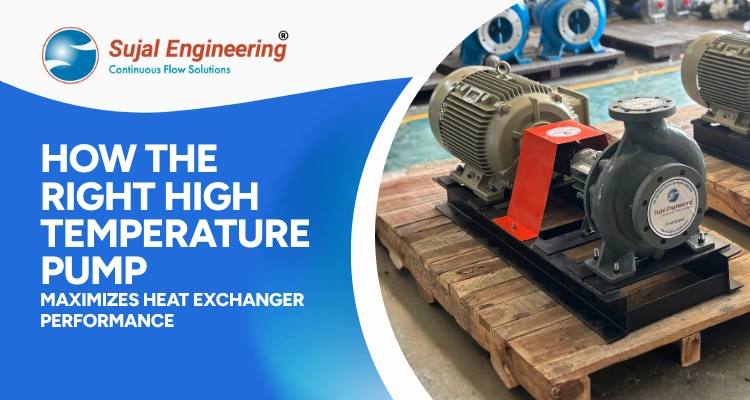
How the Right High Temperature Pump Maximizes Heat Exchanger Performance
Introduction
A heat exchanger performs well only when thermal fluid circulates at the required flow, pressure, and temperature. The high temperature pump is therefore critical because it keeps heat moving between the heater, heat exchanger, process equipment, and return line.
The right thermic fluid pump supports stable heat transfer, consistent process temperature, lower hydraulic losses, and reliable operation. Poor selection can lead to insufficient circulation, cavitation, higher power use, seal problems, vibration, and frequent maintenance.
Key Takeaways
- Select the pump using actual flow, head, temperature, viscosity, and suction conditions.
- Match pump capacity to the complete thermal fluid circuit, not only the heat exchanger.
- Check NPSH carefully because high temperature fluids can be more sensitive to cavitation.
- Use materials, seals, bearings, and cooling arrangements suitable for hot oil service.
- Avoid unnecessary oversizing because excess flow can increase energy use and mechanical stress.
- Consider ATEX requirements when equipment operates in a classified hazardous area.
Planning a Thermal Fluid System?
Talk to Sujal Pumps‘ engineering team with your flow, head, temperature, and fluid data for application-specific pump selection.
Talk to Our Pump ExpertsHow Does a High Temperature Pump Affect Heat Exchanger Performance?
A high temperature pump determines how much thermal fluid reaches the heat exchanger and whether that flow remains stable during operation.
If the flow is too low, the heat exchanger may receive insufficient thermal energy. This can increase heating time, reduce process output, and create unstable temperatures. If flow is too high, the system may experience excessive pressure loss, throttling, vibration, and energy consumption.
The goal is not maximum flow. It is the correct flow at the required total head.
What Is a Thermic Fluid Pump?
A thermic fluid pump, also called a hot oil circulation pump or thermal oil pump, circulates heat transfer fluids at elevated temperatures.
These pumps are used with heat exchangers, heaters, reactors, dryers, and other process equipment. High temperature service creates extra demands because viscosity, seal temperature, thermal expansion, and suction pressure change as the system heats up.
Why Are Flow Rate and Pump Head So Important?
The flow rate determines how much hot fluid passes through the heat exchanger. Pump head represents the energy needed to overcome resistance in the circulation loop.
The required head can include losses through:
- Heat exchangers and heaters
- Supply and return piping
- Valves and fittings
- Filters, strainers, and control equipment
An undersized pump may not overcome these losses. An oversized pump may operate away from its preferred duty point and consume more energy than necessary.
What Happens If the Pump Is Undersized?
An undersized pump can cause low circulation, slow heating, unstable temperature, and reduced heat exchanger performance, especially if fouling or blocked strainers increase resistance.
What Happens If the Pump Is Oversized?
An oversized pump can create excessive flow and pressure, increasing throttling losses, vibration, seal stress, and electricity consumption without improving heat transfer.
How Does Thermal Oil Viscosity Affect Pump Selection?
Thermal oil viscosity changes with temperature. During cold startups, the fluid can be more viscous than during normal operation.
Higher viscosity increases hydraulic resistance and can increase motor load. As the oil heats, viscosity falls and pump conditions change.
For accurate selection, provide the thermal fluid type, startup and operating temperatures, density, viscosity, required flow, and total head.
Why Is NPSH Critical in High Temperature Service?
NPSH, or Net Positive Suction Head, indicates whether enough pressure is available at the pump inlet to prevent the fluid from vaporizing.
High temperature applications need careful suction design because the fluid may operate closer to its vapor pressure. Low available NPSH can cause cavitation, leading to noise, vibration, reduced flow, impeller damage, and seal problems.
Which Pump Features Matter Most High Temperatures?
A high temperature pump needs suitable hydraulics and mechanical construction.
Materials
Pump materials should be selected according to temperature, fluid chemistry, pressure, corrosion risk, and mechanical strength. Temperature alone is not enough to determine compatibility.
Sealing System
Mechanical seals must tolerate the operating temperature, fluid properties, pressure, and startup conditions. Incorrect seal selection can lead to leakage and frequent maintenance.
Bearings and Heat Management
Heat can travel from the casing toward the shaft, bearings, and motor. A suitable hot oil or air-cooled pump design should manage this thermal load within allowable operating conditions.
How Do Correct, Undersized, and Oversized Pumps Compare?
| Selection Factor | Correct Selection | Undersized Pump | Oversized Pump |
| Heat exchanger flow | Matches duty | Too low | May be excessive |
| Temperature control | More stable | Slow or unstable | Can become difficult |
| Energy use | Appropriate | May operate under stress | Often too high |
| System pressure | Matches losses | May be insufficient | May be excessive |
| Vibration and wear | Controlled | May increase | May increase |
Selecting a larger pump as a safety margin is not always beneficial. The pump should match the calculated system curve and intended operating point.
How Should You Specify a Thermal Oil Pump?
A complete technical enquiry helps the pump manufacturer make a more accurate selection.
Provide:
- Required flow rate
- Total dynamic head
- Thermal fluid type
- Startup, normal, and maximum temperature
- Fluid density and viscosity
- Suction conditions and available NPSH
- Operating pressure and duty cycle
- Required construction materials
- Motor and hazardous-area requirements
- Testing and certification requirements
This is more useful than requesting a pump only by connection size or motor rating.
Need the Right Pump for Your Heat Exchanger Duty?
Sujal Pumps can review your process data and recommend a suitable thermic fluid or hot oil circulation pump configuration for your heat exchanger duty.
Talk to Our Pump ExpertsWhat Common Pump Selection Mistakes Should You Avoid?
Common mistakes include selecting pipe size, ignoring cold-start viscosity, oversizing an unnecessary safety margin, overlooking suction losses, and treating seals as standard components.
Also consider the full system. Fouling, valve position, dirty strainers, piping runs, and changing process conditions can shift the pump operating point.
When Is ATEX Compliance Required?
ATEX requirements are relevant when pumping equipment is installed in a classified potentially explosive atmosphere.
High temperature alone does not automatically require ATEX certification. The requirement depends on area classification, gas or dust group, temperature class, equipment category, and applicable regulations.
For hazardous areas, the pump, motor, electrical equipment, and documentation should match the site classification.
How Can Maintenance Protect Heat Exchanger Performance?
Preventive maintenance helps the pump remain close to its intended duty point.
Maintenance teams should monitor vibration, bearing condition, seal leakage, motor current, suction and discharge pressure, thermal fluid condition, strainers, alignment, and abnormal noise.
As heat exchanger fouling increases, pressure loss can rise and reduce flow.
Conclusion
The right high temperature pump helps a heat exchanger receive stable thermal fluid flow under real operating conditions. Good selection starts with system data, not pump size alone.
For reliable operation:
- Calculate required flow and total head.
- Consider viscosity at startup and operating temperature.
- Check NPSH and suction piping carefully.
- Select materials and seals for the actual fluid.
- Avoid unnecessary oversizing.
- Consider hazardous-area compliance where applicable.
Sujal Pumps support industrial applications with in-house manufacturing and testing infrastructure and a range that includes thermic fluid pumps, air-cooled pumps, centrifugal pumps, and chemical process pumps. The company positions its manufacturing around ISO 9001, ISO 14001:2015, ISO 45001, CE, and ATEX requirements, with 15+ years of manufacturing experience since 2009 and exports to 40+ countries.
If you are specifying a hot oil circulation pump for a new heat exchanger or reviewing an existing thermal fluid system, request a technical selection or customized quotation from Sujal Pumps based on your actual flow, head, temperature, and fluid data.
Frequently Asked Questions
1. What Pump Is Used for Hot Oil Circulation?
A thermic fluid or hot oil circulation pump is commonly used to circulate heat transfer oil through heaters, heat exchangers, reactors, and process equipment.
2. How Do I Select a Thermal Oil Pump?
Use required flow, total head, temperature, viscosity, density, NPSH, material compatibility, seal requirements, and duty cycle.
3. Can a Centrifugal Pump Handle Thermal Oil?
Yes, when its design, materials, seals, bearings, and temperature rating suit the specific thermal oil application.
4. What Happens If a Heat Exchanger Pump Is Undersized?
It may deliver insufficient circulation, causing slow heating, unstable process temperature, and lower heat exchanger performance.
5. Is a Larger Hot Oil Pump Always Better?
No. Excessive capacity can increase throttling losses, pressure, power consumption, vibration, and mechanical wear.
6. Why Is NPSH Important for Hot Oil Pumps?
Adequate NPSH helps prevent vapor formation and cavitation at the pump inlet, especially in high temperature service.
7. What Data Is Required for Thermic Fluid Pump Selection?
Provide flow, head, fluid type, temperatures, viscosity, density, suction conditions, pressure, duty cycle, and certification requirements.
8. When Does a Hot Oil Pump Require ATEX Certification?
ATEX requirements apply when the pump is installed in a classified potentially explosive atmosphere and must match the site’s hazardous-area specification.