
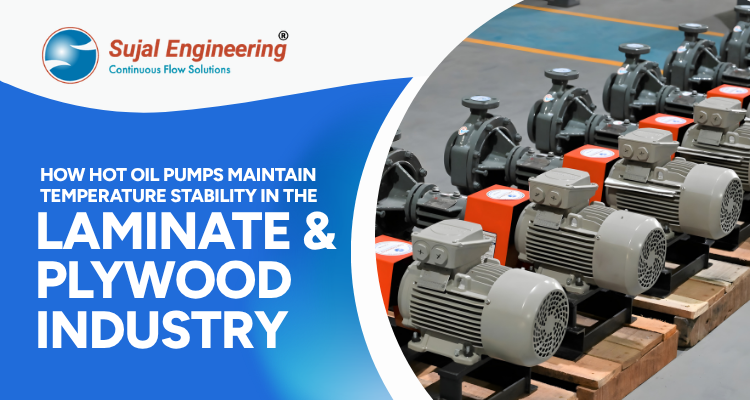
How Hot Oil Pumps Maintain Temperature Stability in the Laminate and Plywood Industry
In the laminate and plywood industry, one variable can make or break product quality: temperature. Press machines used in laminate bonding and plywood manufacturing must maintain precise, consistent heat throughout the entire production cycle. Even a slight drop or spike in temperature can result in delamination, weak bonding, surface defects, or rejected batches.
This is exactly where hot oil pumps become mission critical. A thermic fluid hot oil pump circulates heated thermal oil through press platens, ensuring every square inch of the laminate or plywood sheet receives uniform heat. Sujal Engineering has been supplying industrial hot oil pumps to manufacturers across India and global markets, helping plants achieve the kind of temperature stability that directly translates to product consistency and reduced waste.
In this guide, you will learn how hot oil circulation systems work, why they outperform steam-based systems, and how to choose the right pump for your press machine setup.
Key Takeaways
- Temperature Stability Drives Quality: In laminate and plywood manufacturing, uniform heat distribution across press platens is essential for strong bonding and defect-free output.
- Hot Oil Pumps Are the Core Component: A hot oil circulation pump keeps thermal fluid moving continuously through the heating system, preventing temperature drops and hot spots.
- Thermal Oil Outperforms Steam: Hot oil systems operate at higher temperatures with lower pressure, making them safer and more energy-efficient than steam-based heating.
- Pump Selection Matters: Flow rate, operating temperature, fluid viscosity, and material compatibility are critical factors when choosing a hot oil pump for press machines.
- Continuous Circulation Is Non-Negotiable: Any interruption in thermal fluid flow causes uneven heating, which directly leads to product defects and production downtime.
- Maintenance Prevents Failures: Regular fluid quality checks, seal inspections, and bearing maintenance extend pump life and prevent costly production stoppages.
- Energy Efficiency Is a Real Gain: A well-designed hot oil system with the right pump can significantly reduce fuel and energy consumption compared to older heating methods.
- Industry-Specific Design Is Essential: Pumps used in laminate and plywood plants must handle high-temperature fluids continuously without seal failure or thermal degradation.
What Is a Hot Oil Pump and How Does It Work in Laminate Manufacturing?
A hot oil pump is a centrifugal or rotary pump designed to circulate thermal oil (also called thermic fluid or heat transfer oil) through an industrial heating system. In laminate manufacturing, the pump pushes heated oil from a thermal fluid heater through insulated pipelines into the platens of hydraulic press machines.
The platens absorb the heat from the oil, transfer it to the laminate sheets under pressure, and the cooled oil returns to the heater to be reheated. This closed-loop cycle runs continuously during production.
The basic working principle:
- Thermal oil is heated in a heater unit to the required process temperature (typically between 150 degrees C and 300 degrees C)
- The hot oil pump circulates this fluid at a controlled flow rate through the press system
- Platens receive consistent, uniform heat from the circulating oil
- The return line brings cooled oil back to the heater
- The cycle repeats without interruption throughout the production shift
This continuous circulation is what guarantees temperature stability. There are no steam pressure fluctuations, no condensate management issues, and no heat loss through phase changes.
Why Is Temperature Stability So Critical in Plywood and Laminate Production?
Temperature consistency is not just a process of preference in the laminate and plywood industry. It is a direct quality determinant. Here is why it matters so much.
Bonding quality depends on uniform heat. The adhesive resins used in plywood and laminate panels (typically urea-formaldehyde or melamine-formaldehyde) require a specific temperature range to cure properly. If one section of the press platen is 10 to 15 degrees cooler than another, the resin in that zone will not fully cure. The result is delamination or weak panel strength.
Press cycle times are calculated to temperature. Production schedules are set based on how long it takes for the adhesive to cure at the target temperature. If the oil temperature fluctuates, either the cycle time must be extended (reducing output) or the panel is released prematurely (compromising quality).
Thermal uniformity affects surface finish. In decorative laminate production, surface defects caused by uneven heat are visible to the naked eye. Blotchy finish, uneven gloss, or texture inconsistencies are direct results of poor temperature control in the press.
Consistent heat equals consistent output. Plants that achieve temperature stability report lower rejection rates, fewer rework cycles, and higher throughput per shift, all of which directly improve profitability.
Is your press machine delivering consistent temperatures across all platens?
Talk to our experts to evaluate your current hot oil system.
How Does a Hot Oil Circulation System Compare to Steam Heating?
Many older plywood and laminate plants still use steam-based heating systems. While steam was the standard for decades, modern plants are increasingly shifting to thermal oil systems for good reasons.
| Feature | Hot Oil (Thermal Fluid) System | Steam-Based Heating System |
| Operating Temperature | Up to 300 degrees C or higher | Limited to about 200 degrees C at high pressure |
| Operating Pressure | Low (typically 3 to 5 bar) | High pressure required for higher temps |
| Temperature Control | Precise and stable | Less precise, affected by pressure drops |
| Safety Risk | Lower (no phase change) | Higher (pressurized steam, scalding risk) |
| Energy Efficiency | Higher | Lower (heat loss through condensate) |
| Maintenance Complexity | Moderate | Higher (steam traps, condensate lines) |
| System Response Time | Faster | Slower |
| Fluid Degradation | Gradual (monitored annually) | Condensate causes corrosion over time |
The shift from steam to thermal oil systems has been one of the most significant upgrades in modern plywood plant design. The combination of lower operating pressure at high temperatures makes hot oil systems safer for workers and more efficient for the plant.
What Types of Hot Oil Pumps Are Used in Plywood Press Machines?
Not every pump can handle the demands of continuous high-temperature fluid circulation. The right pump choice depends on the operating temperature, fluid viscosity, system pressure, and flow rate requirements.
Thermic Fluid Hot Oil Pumps (Centrifugal Type)
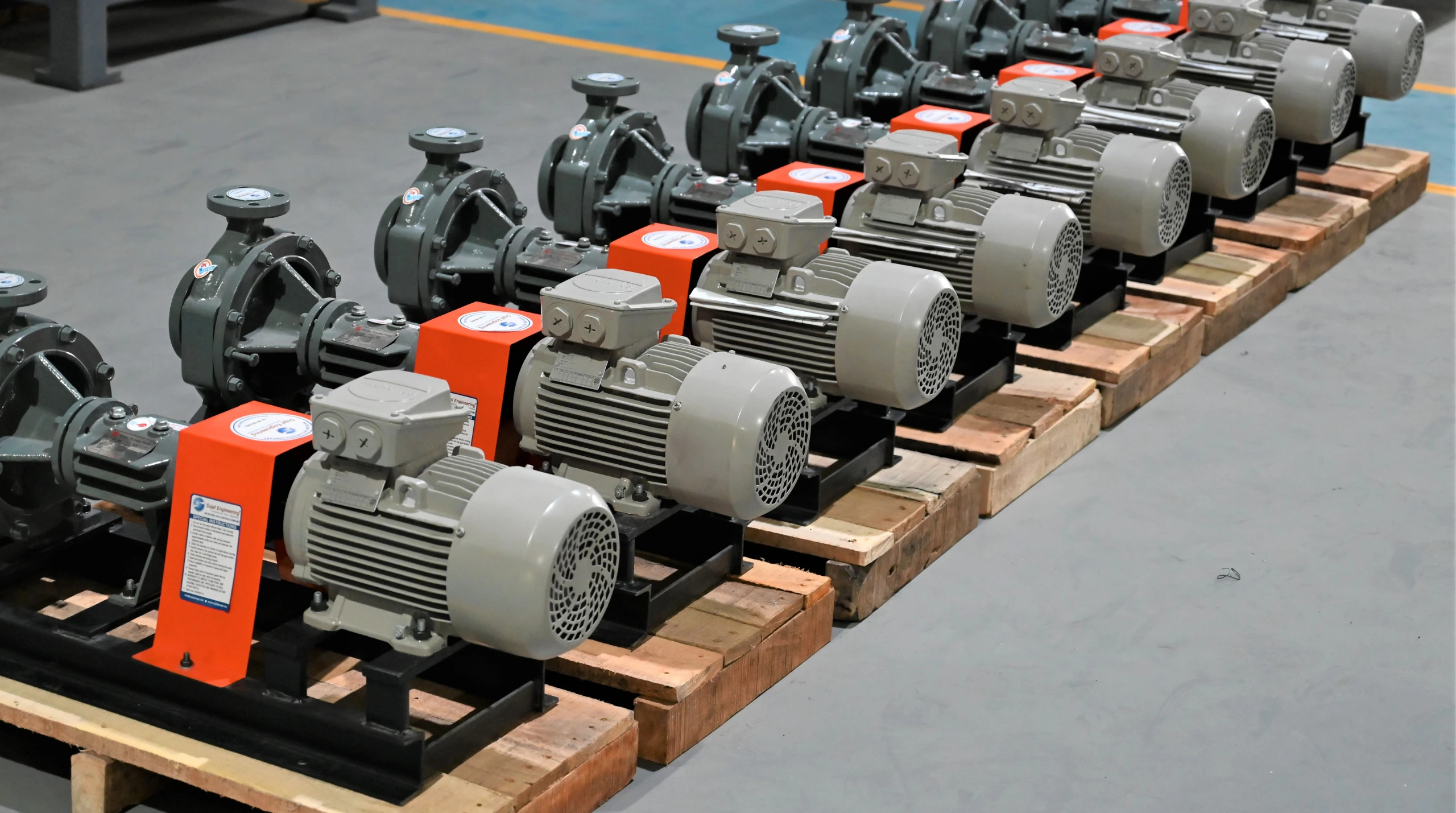
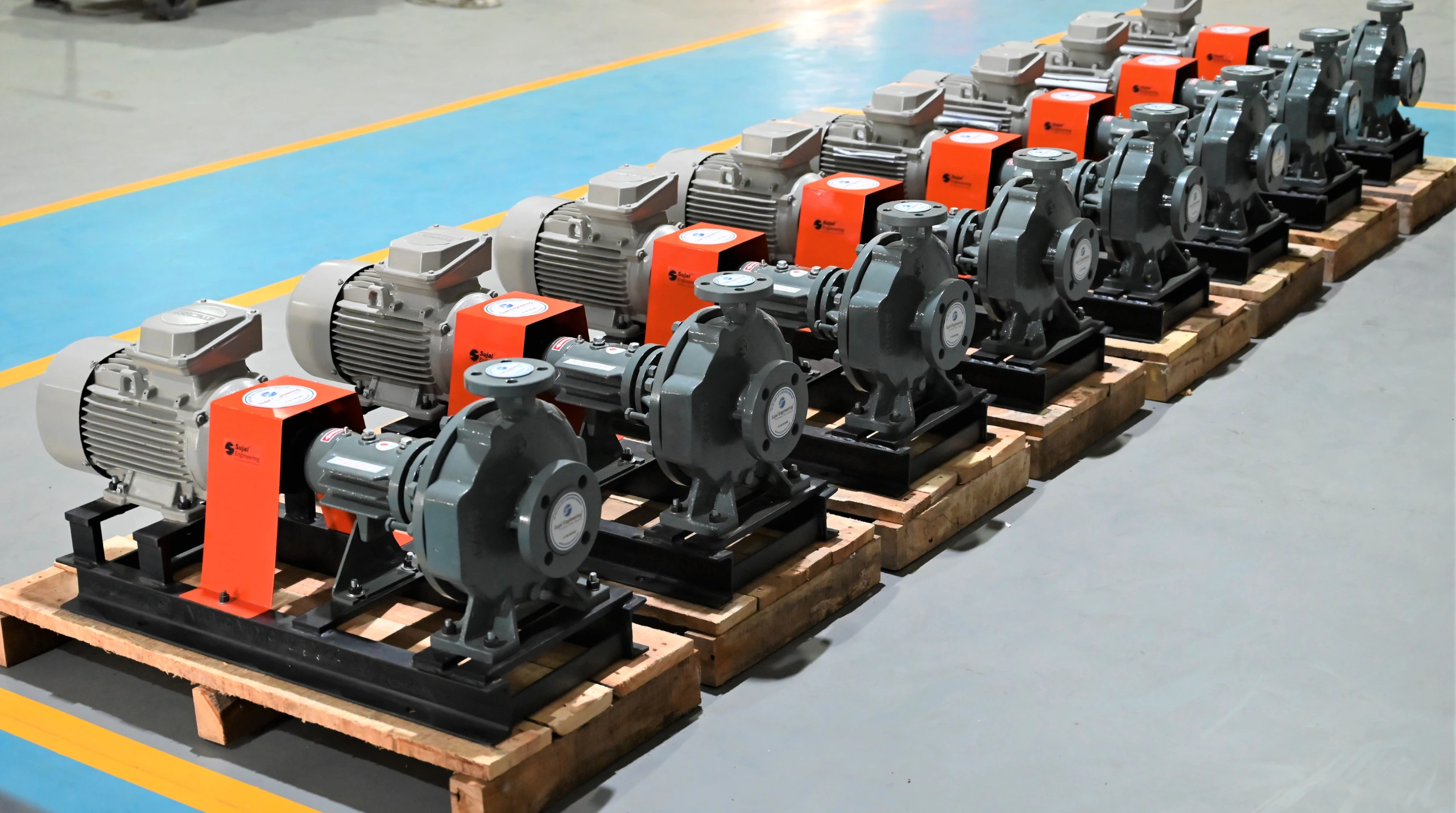
These are the most commonly used pumps in laminate and plywood heating systems. They are specifically designed for continuous circulation of thermal oils at high temperatures. Key features include high-temperature mechanical seals, special bearing arrangements to handle heat, and robust impeller designs for consistent flow.
Sujal Engineering’s Thermic Fluid Hot Oil Pumps are built for this application. They handle continuous duty cycles, resist thermal degradation, and maintain steady flow rates even as fluid viscosity changes with temperature.
Thermal Hot Oil Pump / Water Cooled Pump
In applications where the pump’s bearing housing is exposed to very high ambient temperatures, a water-cooled pump is used. The cooling jacket around the bearing area keeps the mechanical components within safe operating limits while the thermal oil continues flowing at process temperature.
Rotary Gear Pumps
In some systems where precise volumetric flow control is needed or where the thermal oil is more viscous, rotary gear pumps are used. They offer positive displacement characteristics, meaning the flow rate remains consistent regardless of pressure variations in the system.
Not sure which pump type suits your press machine heating system?
Our engineers will recommend the right configuration based on your operating parameters.
What Are the Key Specifications to Look for in a Hot Oil Pump for Industrial Use?
Choosing the wrong pump for a laminate or plywood heating system is a common and costly mistake. Here are the specifications that actually matter.
| Specification | Recommended Range for Laminate/Plywood Industry |
| Operating Temperature | Up to 300 degrees C (continuous duty) |
| Flow Rate | Depends on press size and number of platens |
| Head (Pressure) | Based on system pipe length and resistance |
| Seal Type | High-temperature mechanical seal with cooling |
| Material of Construction | Cast iron, carbon steel, or alloy steel |
| Motor Rating | Selected based on flow and head requirements |
| Bearing Type | Anti-friction bearings with lubrication system |
| Fluid Compatibility | Compatible with synthetic or mineral thermic fluids |
One specification that is often underestimated is the seal cooling arrangement. At operating temperatures above 200 degrees C, standard mechanical seals will fail rapidly without proper cooling. Always confirm that the pump you select has an appropriate seal cooling or quench system built in.
How Do Hot Oil Pumps Prevent Hot Spots and Uneven Heating in Press Platens?
Hot spots are zoned within a press platen where temperature is significantly higher or lower than the target setpoint. They are caused by uneven fluid distribution, air pockets in the circuit, or insufficient flow of velocity through the platen channels.
A properly sized and configured hot oil circulation pump prevents hot spots through several mechanisms:
Adequate flow of velocity: The pump must deliver enough flow to ensure the thermal oil moves through every channel in the platen before it loses too much heat. If the flow rate is too low, the oil entering the platen is at process temperature, but the oil at the exit end is significantly cooler.
Balanced circuit design: In multi-platen press systems, the pump must deliver equal flow to all platens simultaneously. This requires careful hydraulic balancing of the system, which is why pump selection and system design go together.
No air entrainment: Air bubbles in the thermal oil circuit act as insulators. A good hot oil system design includes proper deaeration at the expansion tank and a pump that does not introduce air into the fluid.
Consistent pump performance over time: Wear in the impeller or gear set reduces pump output over time. Regular performance monitoring ensures that the pump is still delivering the design flow rate, which directly maintains thermal uniformity.
Planning to upgrade or replace your hot oil circulation system?
Our team helps plywood and laminate manufacturers select pumps sized precisely for their press configurations.
Consult with Our Experts for a free application analysis.
What Are the Common Problems with Hot Oil Pumps in Laminate Plants and How Are They Fixed?
Even well-designed hot oil systems encounter problems. Knowing the common failure modes helps maintenance teams respond faster and prevent unplanned downtime.
Seal leakage: This is the most common issue in high-temperature pumps. It is usually caused by running the pump with insufficient seal cooling, using the wrong seal grade for the operating temperature, or operating the pump to dry even briefly. Solution: verify seal cooling flow is active before starting the pump, and use seals rated for the maximum operating temperature.
Cavitation: This occurs when the fluid pressure at the pump inlet drops below the vapor pressure of the thermal oil at operating temperature. It causes noise, vibration, and rapid impeller wear. Solution: ensure adequate NPSH (Net Positive Suction Head) at the pump inlet by raising the expansion tank height or increasing the inlet pipe diameter.
Bearing overheating: Often caused by contaminated lubricant, misalignment, or running the pump outside its design operating range. Solution: check alignment regularly, maintain proper lubrication intervals, and verify the pump is operating at its design point.
Thermal oil degradation: Over time, thermal oil breaks down, increases in viscosity, and forms sludge. This increases pump load and reduces heat transfer efficiency. Solution: conduct annual oil quality tests and replace the fluid when flash point or viscosity falls outside acceptable limits.
Reduced flow rate: Gradual wear of the impeller or gear set reduces pump output without obvious warning. Solution: monitor pump discharge pressure and compare it against the original performance curve. A significant drop indicates that it is time for inspection.
How Does Proper Pump Sizing Affect Energy Efficiency in Plywood Manufacturing?
An oversized pump wastes energy. An undersized pump fails to deliver the required thermal performance. Correct pump sizing is the single most impactful factor in the long-term energy efficiency of a hot oil system.
When a pump is oversized, it operates far from its best efficiency point (BEP). This wastes electrical energy and also generates excessive heat in the bearing housing, accelerating wear. In a system running 16 to 24 hours per day, the cumulative energy waste from an oversized pump is substantial.
When a pump is correctly sized, it runs at or near its BEP, which means maximum hydraulic efficiency, lower motor amperage, reduced heat generation, and longer component life. For a plywood plant running multiple press lines, this can translate to measurable reductions in monthly electricity consumption.
Sujal Engineering provides complete pump sizing support for thermal oil systems, taking into account the number of press platens, total system pipe length, required temperature differential, and fluid properties.
What Maintenance Practices Keep Hot Oil Pumps Running at Peak Performance?
Preventive maintenance is always cheaper than emergency repairs or unplanned production stoppages. Here is a practical maintenance schedule for hot oil pumps in laminate and plywood plants.
Daily checks:
- Verify seal cooling water flow (if applicable)
- Check for any visible leaks at flanges or seal faces
- Monitor bearing temperature (should not exceed manufacturer limit)
- Confirm discharge pressure is within normal range
Monthly checks:
- Inspect coupling alignment
- Check lubrication oil level and condition in bearing housing
- Verify vibration levels are within acceptable range
- Inspect all pipe connections and supports for thermal movement
Annual checks:
- Drain and analyze thermal oil (viscosity, flash point, acid number)
- Inspect impeller for wear or deposits
- Replace mechanical seals proactively if approaching design life
- Check motor insulation resistance
Following this schedule on a consistent basis will typically extend pump life by 30 to 50 percent compared to run-to-failure maintenance practices.
Conclusion: Reliable Temperature Control Starts with the Right Hot Oil Pump
In the laminate and plywood industry, product quality is inseparable from process temperature control. Every layer of adhesive, every press cycle, and every finished panel depends on the hot oil circulation system delivering consistent, uniform heat exactly where and when it is needed.
The pump at the heart of this system is not a commodity component. It is a precision piece of industrial equipment that must be correctly selected, properly sized, and consistently maintained to deliver the performance your production line demands.
Sujal Engineering designs and manufactures high-performance Thermic Fluid Hot Oil Pumps and Thermal Hot Oil Pumps built specifically for the demanding conditions of laminate and plywood manufacturing. With decades of experience serving industrial clients across India and international markets, our team understands the exact performance requirements your press systems need. Reach out to our team today to discuss your hot oil pump requirements and get a solution that keeps your production running without interruption. Connect with Sujal Engineering.
Frequently Asked Questions
Frequently Asked Questions
What is a hot oil pump used for the laminate industry?
A hot oil pump circulates heated thermal oil through the platens of laminate press machines. It maintains consistent process temperature during the bonding and curing cycle, ensuring uniform resin cure and defect-free panel output.
What temperature range do hot oil pumps handle in plywood manufacturing?
Most industrial hot oil pumps used in plywood and laminate plants operate between 150 degrees C and 300 degrees C. The exact temperature depends on the resin system used and the press machine specifications.
Why is thermal oil preferred over steam in modern laminate plants?
Thermal oil systems operate at much lower pressure than steam systems while achieving higher temperatures. This makes them safer, easier to control, and more energy-efficient, particularly in plants running continuous production.
How do I know if my hot oil pump is undersized for my press system?
Signs of an undersized pump include longer press cycle times, uneven surface finish on panels, temperature drop between the heater outlet and the press inlet, and frequent heater cycling to compensate for heat loss.
What causes hot oil pump seal failure in high-temperature applications?
Seal failure is most caused by running the pump without adequate seal cooling, using seals not rated for the operating temperature, or allowing the pump to run dry even briefly. Always confirm that seal cooling is active before starting the pump.
How often should thermal oil be replaced in a hot oil circulation system?
Most thermal oil manufacturers recommend annual quality testing. Replacement is typically needed every 3 to 5 years for mineral oils and every 5 to 8 years for synthetic fluids, depending on operating temperature and system cleanliness.
Can one hot oil pump serve multiple press machines simultaneously?
Yes, a central hot oil system with a sufficiently sized pump can serve multiple press lines. The system must be hydraulically balanced to ensure equal flow to all presses. A professional system design review is recommended before expanding an existing system.
What is the difference between a water-cooled and an air-cooled hot oil pump?
A water-cooled pump uses a cooling jacket or water-cooled bearing housing to protect mechanical components from high ambient heat. An air-cooled pump relies on ambient air circulation. Water-cooled designs are preferred in applications with very high operating temperatures or enclosed installations.