
Industrial Pumps for Ethanol Processing: Improving Efficiency and Reliability
Introduction
Industrial pumps are critical to ethanol production because they move feedstock, process liquids, chemicals, hot fluids, and wastewater through each stage of the plant. The right pump improves process stability, reduces avoidable energy losses, limits cavitation risk, and supports reliable continuous operation.
For ethanol plants, pump selection should be based on the actual fluid, flow rate, head, temperature, viscosity, solids content, material compatibility, duty cycle, and hazardous-area classification.
Key Takeaways
- Different stages of ethanol processing require different pump types and materials.
- Flow, head, NPSH, temperature, viscosity, and solids content should be defined before selection.
- Centrifugal pumps suit many transfer duties, while gear, slurry, sump, diaphragm, and thermal fluid pumps serve more specialized applications.
- Material and seal compatibility are essential where ethanol, chemicals, corrosive liquids, or hot fluids are present.
- ATEX-rated equipment may be required in classified hazardous areas.
- Preventive maintenance helps reduce cavitation, leakage, vibration, and unplanned downtime.
Why Are Industrial Pumps Important in Ethanol Plants?
Industrial pumps keep ethanol processes moving from raw-material handling to product transfer and wastewater treatment. A single plant may require several pump designs because fluid properties change between process stages.
An ethanol facility can handle thin liquids, viscous fluids, solids-containing streams, cleaning chemicals, hot process fluids, condensate, and wastewater. Each service creates different hydraulic, material, sealing, and safety requirements.
Which Pumps Are Commonly Used in Ethanol Processing?
The correct pump depends on the fluid and duty.
Centrifugal Pumps
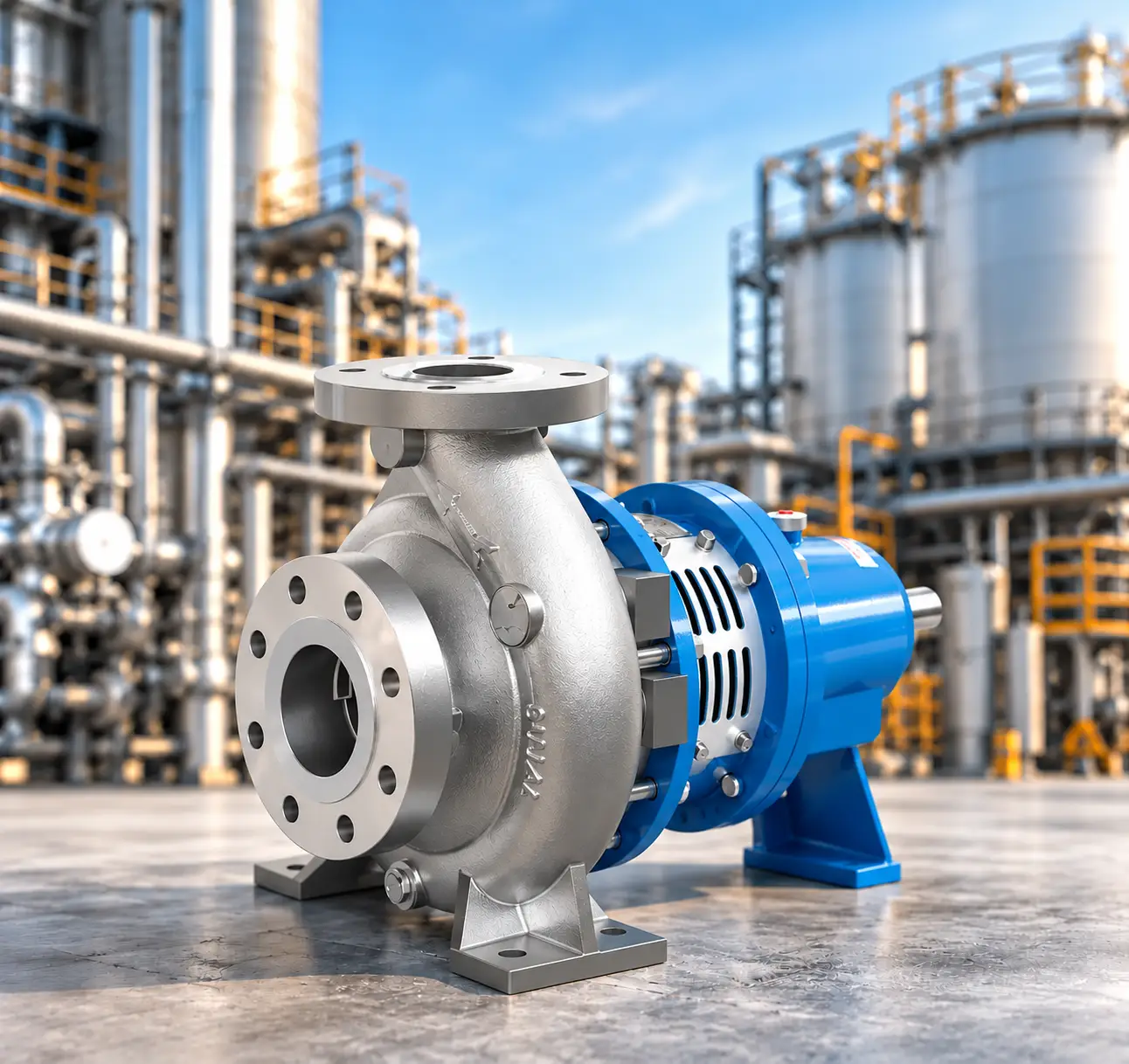
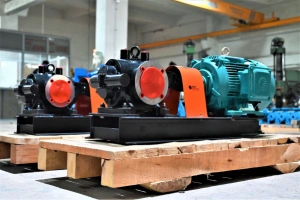
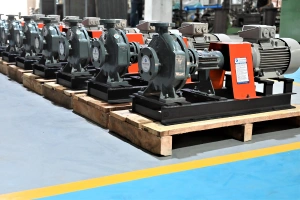
Centrifugal pumps are commonly suited to low and medium viscosity liquid transfer, water circulation, process transfer, cooling water, and general utility duties. They are useful where steady flow is required.
Chemical Process Pumps
Chemical process pumps can handle corrosive or aggressive liquids when the pump materials and seals are compatible. PP or PVDF-lined configurations may be considered where chemical resistance is required, subject to actual temperature and fluid compatibility.
Gear, Slurry, Sump, and Diaphragm Pumps
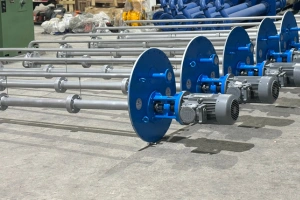
Gear pumps can suit higher-viscosity transfer duties. Slurry pumps are considered where process streams contain abrasive solids. Sump pumps and submersible pumps can support drainage and wastewater handling, while diaphragm pumps may be used for dosing or difficult chemical duties.
Hot Oil or Thermal Fluid Pumps
Thermic fluid pumps are used where thermal oil circulates through heaters, heat exchangers, dryers, or other heating systems. High-temperature service requires suitable seals, bearings, materials, and heat-management arrangements.
How Do Pump Types Compare for Ethanol Applications?
| Pump Type | Typical Ethanol Plant Duty | Key Selection Concern |
| Centrifugal Pump | Water, transfer, circulation | Flow, head, NPSH |
| Chemical Process Pump | Chemicals and corrosive liquids | Material compatibility |
| Gear Pump | Viscous liquid transfer | Viscosity and pressure |
| Slurry Pump | Solids-containing streams | Abrasion and solids handling |
| Sump Pump | Pits, drains, wastewater | Liquid properties |
| Diaphragm Pump | Dosing or chemical duty | Chemical compatibility |
| Thermal Fluid Pump | Hot oil circulation | Temperature and seal design |
What Technical Data Should You Provide Before Pump Selection?
A reliable pump selection starts with complete operating data. The duty point is the required combination of flow rate and total head at which the pump is expected to operate.
Provide:
- Required flow rate and total dynamic head
- Fluid name and composition
- Operating and maximum temperature
- Density and viscosity
- Solids size and concentration, if present
- Suction pressure and available NPSH
- Operating pressure and duty cycle
- Material and sealing requirements
- Motor supply and hazardous-area classification
- Required testing and documentation
Need Help Choosing the Right Pump for Your Ethanol Process?
Our experts at Sujal Pumps can review your flow, head, fluid, temperature, viscosity, and installation conditions and recommend a suitable pump configuration for your ethanol process.
Talk to Our Pump ExpertsWhy Do Flow, Head, and NPSH Matter?
The flow rate determines the amount of liquid moved through the process. Total head represents the energy the pump must provide to overcome piping friction, elevation changes, valves, filters, and equipment resistance.
NPSH, or Net Positive Suction Head, indicates whether enough pressure exists at the pump inlet to avoid vaporization.
If available NPSH is too low, cavitation may occur. This can cause noise, vibration, reduced flow, impeller damage, and seal problems.
Which Materials Are Suitable for Ethanol Processing Pumps?
Pump material selection should be based on fluid chemistry, temperature, solids content, corrosion risk, and cleaning chemicals.
Depending on the duty, metallic or engineered polymer components may be suitable. PP or PVDF-lined chemical process pumps may be considered for aggressive chemicals when published compatibility limits suit the fluid and temperature.
Mechanical seal faces, elastomers, gaskets, and other wet components must also be compatible.
When Are ATEX-Certified Pumps Needed in Ethanol Plants?
ATEX-certified pumps may be required where equipment operates in a classified atmosphere with a potential explosion risk.
Ethanol is flammable, but ATEX requirements depend on the plant’s hazardous-area assessment.
Plant engineers should therefore consider the site’s zone classification, gas group, temperature class, motor specification, and equipment category when defining pump requirements for hazardous areas.
How Can Pumps Improve Energy Efficiency in Ethanol Production?
Pump efficiency improves when the pump operates close to its intended duty point.
Oversized pumps can waste energy through throttling and excessive pressure. Undersized pumps may fail to deliver the required process flow.
Efficiency can be supported by:
- Accurate system calculations
- Correct pump and impeller sizing
- Suitable pipe and valve sizing
- Clean filters and strainers
- Correct valve positions
- Routine pump performance monitoring
The objective should be to match pump output with actual process demand rather than adding excessive capacity as a safety margin.
What Pump Selection Mistakes Cause Reliability Problems?
Many pump problems begin with incomplete specifications.
Common mistakes include:
- Selecting only by pipe size
- Ignoring viscosity or solids
- Oversizing for excessive safety margin
- Failing to calculate suction losses
- Using incompatible seals or materials
- Ignoring high-temperature conditions
- Operating away from the intended duty point
- Overlooking hazardous-area requirements
These mistakes can contribute to cavitation, excessive vibration, premature seal failure, corrosion, unstable flow, and unnecessary energy consumption.
How Should Ethanol Plant Pumps Be Maintained?
Routine monitoring helps identify developing hydraulic or mechanical problems.
Maintenance teams should check vibration, bearing temperature, seal leakage, motor current, suction and discharge pressure, alignment, strainers, coupling condition, abnormal noise, and visible corrosion.
A pump should also be reviewed when operating conditions change. Changes in fluid properties, flow demand, system pressure, piping configuration, or production rate can shift the pump away from its original duty point.
Need a Technical Datasheet or Customized Quotation?
Before your next pump specification or replacement, Sujal Pumps can provide a technical datasheet or customized quotation based on your actual ethanol plant duty.
Request a Technical Datasheet or QuotationConclusion
Efficient ethanol processing depends on selecting pumps for the real characteristics of each process stream. No single pump design suits every transfer, chemical, slurry, drainage, or heating duty.
- Define the correct flow and the total head.
- Check NPSH and suction conditions.
- Match materials and seals to the fluid.
- Consider viscosity, solids, and temperature.
- Specify ATEX requirements where applicable.
- Maintain pumps using operating and condition data.
Sujal Pumps supports industrial applications through in-house manufacturing and testing infrastructure, with ISO 9001, ISO 14001:2015, ISO 45001, CE, and ATEX-related manufacturing capabilities. With 15+ years of industrial pump manufacturing experience since 2009 and export reach across 40+ countries, the company supports OEMs, EPC contractors, plant engineers, and industrial buyers.
For a new ethanol plant, process expansion, or pump replacement requirement, contact Sujal Pumps to discuss pump selection, technical documentation, or customized quotation based on your actual operating conditions.
Frequently Asked Questions
1. What pumps are used in ethanol plants?
Ethanol plants may use centrifugal, chemical process, gear, slurry, sump, diaphragm, submersible, and thermal fluid pumps depending on the process of duty.
2. Which pump is best for ethanol transfer?
A centrifugal pump is often suitable for clean, low-viscosity transfer duties, subject to the required flow, head, material compatibility, and suction conditions.
3. Can chemical process pumps be used in ethanol production?
Yes. They can be used when their materials, seals, temperature limits, and hydraulic performance are compatible with the specific process of liquid.
4. Why is NPSH important in ethanol process pumps?
Adequate NPSH helps prevent cavitation, which can cause vibration, flow loss, impeller damage, noise, and seal problems.
5. Are ATEX pumps required in ethanol plants?
They may be required in classified hazardous areas. The exact requirement depends on the plant’s zone classification and applicable safety regulations.
6. How do you select pumps for solid-containing ethanol streams?
Consider solids size, concentration, abrasiveness, settling tendency, required flow, head, and construction before selecting a slurry or similar solids-handling pump.
7. What causes high energy consumption in ethanol process pumps?
Common causes include oversizing, throttling, excessive system resistance, worn components, blocked strainers, and operation away from the intended duty point.
8. What information should I send to an industrial pump manufacturer?
Provide flow, head, fluid composition, temperature, viscosity, density, solids data, NPSH, pressure, duty cycle, materials, motor requirements, and certification needs.