
How Vacuum Conditions Affect Pump Performance in Industrial Systems
How Vacuum Conditions Affect Pump Performance in Industrial Systems
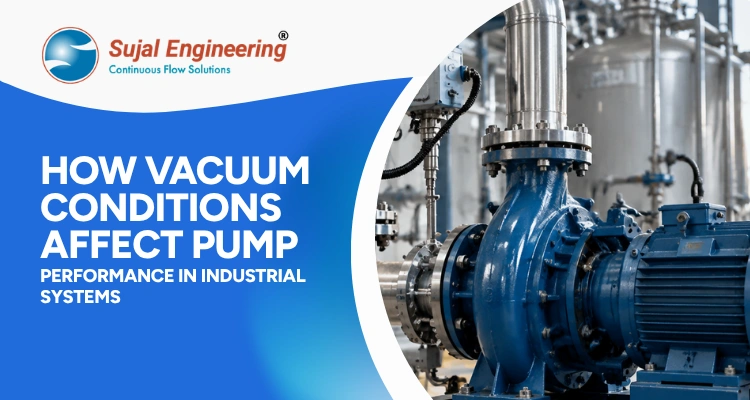
When a pump’s suction side sits at or below atmospheric pressure, the margin protecting it from cavitation gets thinner. That margin, Net Positive Suction Head Available (NPSHA), shrinks as vacuum deepens. As NPSHA approaches the pump’s published NPSHR or NPSH3 value, cavitation risk and performance loss increase. The selected pump therefore needs an application-appropriate NPSH margin. Vacuum-side duty is routine in steam condensers, distillation columns, vacuum filters, vacuum deaerators or degassing vessels, and evaporator systems. It is also one of the most common reasons plant teams see premature seal failure, impeller pitting, and unstable flow in otherwise well-built pumps.
Key Takeaways
- Vacuum on the suction side reduces NPSHA, the pressure margin that keeps a centrifugal pump from cavitating.
- Vacuum duty points must be worked out in absolute pressure, not gauge pressure. A conventional vacuum gauge reads zero at local atmospheric pressure, so its reading must be converted to absolute pressure before calculating NPSHA.
- Common vacuum-side applications include steam condensers, distillation and stripping columns, vacuum filters and dryers, vacuum deaerators or degassing vessels, and flash or evaporator vessels.
- Fluid temperature has an outsized effect under vacuum, because vapor pressure rises sharply as a liquid nears its boiling point at that reduced pressure.
- Flooded suction and short, low-friction piping help preserve NPSHA, while correct seal selection helps limit air ingress and maintain hydraulic stability in a vacuum system.
- A pump’s published maximum flow and maximum head are not proof it will handle a specific vacuum duty. The actual pump curve and application data decide that.
What Does “Vacuum Condition” Mean for a Pump’s Suction Side?
A vacuum condition exists whenever absolute pressure at the pump’s suction is below normal atmospheric pressure (roughly 1.01 bar at sea level), either because the source vessel is deliberately held under vacuum, as in a steam condenser or distillation column, or because suction lift and friction losses pull local pressure down as the pump draws liquid toward it.
The key shift in thinking: vacuum is still pressure, just below atmospheric, not the absence of pressure. Even a vessel at high vacuum retains some pressure above absolute zero, and that remaining pressure determines how close the liquid sits to its vapor point.
How Does Vacuum Affect NPSH Available (NPSHA)?
NPSHA is the pressure margin available at the pump suction, above the liquid’s vapor pressure, expressed as head. It is built from the source pressure, the static elevation between the liquid surface and the pump centerline, friction and entry losses in the suction line, and the fluid’s vapor pressure at operating temperature.
When the source is under vacuum, the starting pressure term is already below atmospheric, so NPSHA falls before friction losses or elevation are even considered. A worked example of NPSHA under vacuum shows how the pressure deficit and pump submergence combine into an equivalent suction lift.
NPSHR, often published as NPSH3, is a property of the pump established by the manufacturer through testing. NPSH3 is conventionally associated with a 3% reduction in pump head due to cavitation, so it should not be treated as a no-cavitation boundary. Vacuum-duty selection requires the calculated NPSHA to exceed the published requirement by an application-appropriate margin across the expected operating range.
What Industrial Applications Commonly Operate Under Vacuum?
Vacuum-side pumping is more common in process plants than many buyers expect. Typical examples:
- Steam surface condensers, where vacuum is maintained deliberately to improve turbine efficiency
- Vacuum distillation and stripping columns in chemical, petrochemical, and ethanol processing
- Vacuum filters and dryers in chemical, pharmaceutical, and food processing lines
- Vacuum deaerators and vacuum degassing vessels that remove dissolved gases from process liquids or boiler feedwater
- Flash vessels and evaporators run below atmospheric pressure to lower the process fluid’s boiling point
Ethanol and biofuel plants commonly run vacuum-stage distillation and stripping columns, a theme covered further in Industrial Pumps for Ethanol Processing.
How Does Cavitation Develop as NPSHA Approaches NPSHR?
As liquid accelerates into the impeller eye, local static pressure drops further below the already-reduced suction pressure. If it falls to the liquid’s vapor pressure, vapor pockets form, travel into a higher-pressure region of the impeller, and collapse almost instantly, sending a localized pressure shock against the vanes and casing.
Repeated over millions of cycles, this erodes metal and pits impeller surfaces. It typically shows up first as noise, vibration, and a drop in delivered head and flow, well before physical damage is visible on inspection.
Why Does Fluid Temperature Matter More Under Vacuum?
Vapor pressure rises sharply as a liquid approaches its boiling point at the working pressure. Under atmospheric suction, a comfortable temperature margin often exists before vapor pressure becomes limiting. Under vacuum, that margin can disappear, because the liquid is often already close to boiling at the reduced pressure by design, as inside a condenser or vacuum evaporator.
The same fluid at the same flow rate can be a straightforward selection at atmospheric pressure and a genuine NPSH problem once the source is under vacuum. Treat operating temperature as a first-order input for vacuum-duty selection, not an afterthought.
How Does Elevation Affect Pumps Operating Near Vacuum Conditions?
Atmospheric pressure falls with altitude, so elevation directly reduces the pressure available to an open, atmospheric vessel and affects vacuum readings referenced to local atmospheric pressure. A plant at 1,000 to 2,000 meters can therefore have less NPSHA than an otherwise identical installation at sea level. However, when a closed vessel is controlled and specified at a stated absolute pressure, that absolute pressure already accounts for the pressure level at the liquid surface and altitude should not be deducted again. Confirm how the vessel pressure is specified before completing the NPSHA calculation.
Not Sure Whether Your Pump Has Enough NPSH Margin?
Share your source pressure, fluid temperature, liquid level, suction-piping details, required flow and head with Sujal Engineering for an application-based duty-point review.
Request a Duty-Point ReviewWhat Pump and Piping Design Choices Improve Reliability Under Vacuum?
A handful of design decisions do most of the work in protecting NPSHA and reliability in vacuum service:
- Flooded suction wherever possible. Keeping the liquid source above the pump centerline adds static head back into NPSHA instead of subtracting it.
- Short, low-friction suction piping. Fewer bends, larger diameters, and minimal fittings preserve an already-reduced pressure margin.
- Correct seal selection. In a sub-atmospheric suction cavity, the pressure differential across the seal can pull air inward rather than let fluid leak outward, introducing non-condensable gas that can disrupt priming, flow, and hydraulic stability. Pump ranges offering both single and double mechanical seal options allow the seal to be matched to actual suction pressure.
- Avoiding vortexing at the suction source. Adequate submergence and anti-vortex fittings stop air being drawn in from the liquid surface.
- Verifying the pump curve at the real duty point. Published maximum capacity and head describe the outer envelope of a range, not a guaranteed simultaneous operating point.
The SCPP Series Centrifugal Process Pump is described by Sujal Engineering as designed for low-NPSH duty and offered with single or double mechanical seal configurations. These features can be relevant when suction-side vacuum or high fluid temperature narrows the available NPSH margin, but they do not by themselves confirm vacuum-duty suitability. The selected curve, seal arrangement, suction pressure, operating temperature, fluid properties, and required NPSH margin must be reviewed. Its back pull-out construction also lets service teams inspect the impeller for cavitation erosion without disturbing suction and discharge piping.
Need a Pump for a Low-NPSH Process Duty?
Explore the SCPP Series Centrifugal Process Pump for demanding industrial applications where suction conditions, fluid temperature and the available NPSH margin require careful evaluation.
View the SCPP SeriesWhat Are the Warning Signs of Vacuum-Related Cavitation?
| Symptom | Possible Cause | What to Check |
| Crackling or gravel-like noise at the pump | Vapor bubble formation and collapse inside the impeller | NPSHA versus NPSHR or NPSH3 at the actual duty point |
| Fluctuating discharge pressure or flow | Intermittent vapor pockets, air ingress, vortexing, or suction blockage | Suction line, liquid level, joints, seals, and source conditions |
| Gradual loss of head or capacity | Cavitation damage, wear, fouling, or operation away from the intended duty point | Pump curve, system resistance, and impeller condition |
| Elevated vibration or bearing temperature | Unstable hydraulic loading, misalignment, bearing wear, or cavitation | Alignment and bearing condition alongside the NPSH review |
| Seal leakage or premature seal wear | Air ingress, pressure instability, incorrect seal selection, or mechanical condition | Seal type and suitability for the actual suction pressure |
Suction Condition Comparison
| Suction Condition | Typical Source Pressure | Effect on NPSHA | Key Design Consideration |
| Flooded suction, atmospheric source | Atmospheric or above | Generally provides a higher available margin | Minimize friction losses and size piping appropriately |
| Suction lift, atmospheric source | Atmospheric | Reduced by static lift and friction | Keep lift and pipe length to a practical minimum |
| Vacuum service such as a condenser, column, or evaporator | Below atmospheric | Reduced by the absolute pressure at the liquid surface | Confirm vapor pressure at operating temperature, minimize suction losses, and consider a flooded arrangement |
What Data Should You Send for Pump Selection in a Vacuum Application?
A useful vacuum-duty enquiry usually includes:
- Fluid name and process description
- Absolute pressure at the liquid source (not gauge pressure)
- Operating temperature and the fluid’s vapor pressure at that temperature
- Required flow rate and total dynamic head or differential pressure
- Elevation of the installation site above sea level
- Suction pipe length, diameter, and fitting count
- Static elevation between the liquid surface and the pump centerline
- Any solids, corrosive constituents, or hazardous-area requirement
Sending this lets an engineering team check NPSHA against the pump’s NPSHR curve, rather than estimating from a specification sheet. Sujal Engineering’s Chemical Process Pump SCP Series may be evaluated for compatible chemical-process duties in the chemical industry, subject to confirmation of the NPSH margin, seal configuration, complete material compatibility, suction pressure, and operating temperature. The published product information does not by itself confirm suitability for every corrosive, volatile, vacuum-stripping, distillation, or pharmaceutical duty.
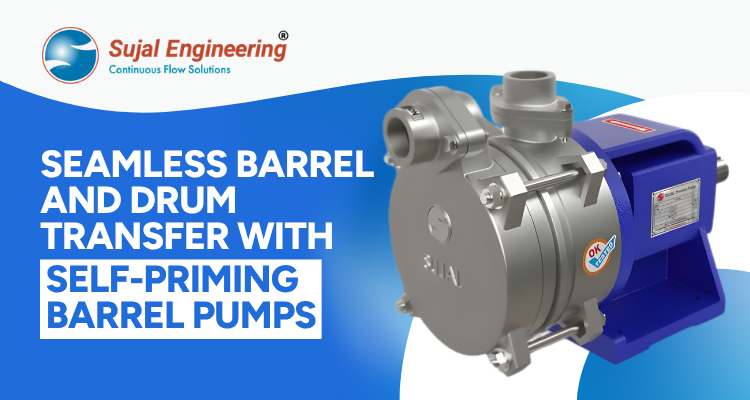
For deep pits or sumps, the Vertical Long Shaft Sump Pump SVSP Series installs directly in the sump without priming. Placing the impeller near or below the liquid level can reduce priming and suction-lift limitations, but NPSHA must still be checked against the pump’s requirement with an appropriate margin. This arrangement is explored further in Why Vertical Long Shaft Pumps Are Ideal for Deep Pit Applications. Worth distinguishing: a self-priming barrel pump uses internal recirculation to clear air from an unprimed line at startup, an atmospheric-pressure problem that does not by itself change the NPSH margin once a source is under sustained vacuum.
Planning a Pump for a Vacuum Vessel or Process System?
Send Sujal Engineering your fluid properties, absolute source pressure, operating temperature, flow, head and suction arrangement for application-based pump guidance.
Discuss Your Vacuum-Duty ApplicationConclusion
Vacuum conditions lower NPSHA, so it should be quantified before pump selection, not discovered after startup. Absolute pressure, vapor pressure at actual operating temperature, and site elevation are the key inputs, and a verified pump curve and duty point, not a series’ published maximum capacity and head, should guide the final choice. Sujal Engineering’s engineering team can review your application data and confirm whether a series such as SCPP fits, or whether the suction arrangement needs adjustment first.
Frequently Asked Questions
1. What is NPSH and why does vacuum affect it?
NPSH is the pressure margin, expressed as head, between the liquid at the pump suction and its vapor pressure. Vacuum lowers suction pressure, directly reducing that margin (NPSHA).
2. What is the difference between NPSHA and NPSHR?
NPSHA is a system property calculated from source pressure, elevation, friction losses, and vapor pressure. NPSHR or NPSH3 is a pump property established by the manufacturer. For reliable operation, NPSHA should exceed the published requirement by an application-appropriate margin; simply exceeding NPSH3 does not guarantee cavitation-free operation.
3. Can a centrifugal pump run under vacuum conditions?
Yes, provided suction piping, seal design, and duty point are engineered around the reduced NPSHA. Condensate and vacuum-column services run reliably under vacuum when correctly specified.
4. What happens if a pump cavitates under vacuum service?
Vapor bubbles form and collapse inside the impeller, producing noise, vibration, and fluctuating flow, and over time, erosion of the impeller and casing.
5. How does fluid temperature affect NPSH in a vacuum system?
Vapor pressure rises sharply as temperature nears the liquid’s boiling point at the working pressure, so hotter fluids under vacuum leave a much smaller NPSH margin than the same fluid at ambient temperature.
6. Does altitude affect pump performance in vacuum applications?
It depends on how source pressure is defined. Altitude directly affects open atmospheric vessels and vacuum readings referenced to local atmospheric pressure. If a closed vessel is controlled at a stated absolute pressure, use that absolute pressure directly and do not apply a second altitude correction.
7. What information does Sujal Engineering need to select a pump for vacuum duty?
Fluid type, absolute source pressure, operating temperature and vapor pressure, required flow and head, site elevation, and suction piping details are the core inputs for a duty-point check.
8. Is a self-priming pump the same as a vacuum-rated pump?
No. A self-priming pump evacuates air from an empty suction line at startup. It does not change how much NPSH margin is available once the source itself is under sustained vacuum.