
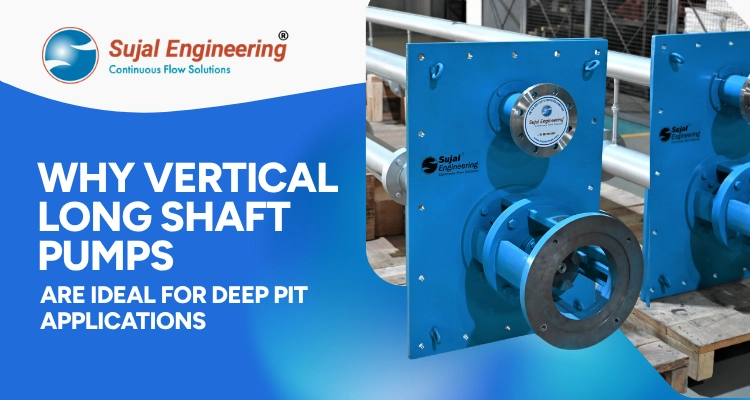
Why Vertical Long Shaft Pumps Are Ideal for Deep Pit Applications
Introduction: The Deep Pit Problem That Stops Operations Cold
When liquid needs to be moved from a deep underground pit, most standard pumps simply cannot reach it. The motor sits too low, the suction head is insufficient, and the maintenance nightmare begins before the first drop ever flows.
This is where the vertical long shaft pump steps in as the definitive engineering solution. These pumps are purpose-built to operate in confined, deep, and often chemically aggressive environments where no other pump type can reliably function.
At Sujal Engineering, we have been engineering vertical sump pumps for industries across India and globally, and one thing is consistent: when plant managers finally switch to the right vertical long shaft design, downtime drops and operational confidence goes up.
This blog breaks down exactly why vertical long shaft pumps are the go-to choice for deep pit applications, which industries benefit most, and what to look for when selecting the right pump for your facility.
Key Takeaways
- Designed for Depth: Vertical long shaft pumps can handle pit depths from 1 meter to over 6 meters, making them ideal where submersible pumps fail or are impractical.
- Motor-Above-Liquid Design: The motor is mounted above the pit level, protecting it from corrosive fumes, flooding, and chemical splashes.
- Space Efficiency: These pumps require minimal floor space because they are installed vertically, making them perfect for confined industrial sumps and basins.
- Corrosion Resistance Available: Construction materials including cast iron, stainless steel, and polypropylene allow these pumps to handle acids, alkalis, and corrosive process liquids.
- Continuous Duty Capable: Unlike many alternatives, vertical long shaft pumps are engineered for 24/7 continuous operation in demanding industrial environments.
- Wide Industry Application: Mining dewatering, chemical processing, wastewater treatment, textile mills, pharmaceutical plants, and paper and pulp industries all rely on this pump type.
- Lower Maintenance Costs: The above-ground motor placement reduces the frequency and cost of servicing compared to fully submerged pump systems.
- Customizable Shaft Length: The shaft length can be engineered to match the exact pit depth, eliminating guesswork and ensuring optimal performance.
What Is a Vertical Long Shaft Pump and How Does It Work?
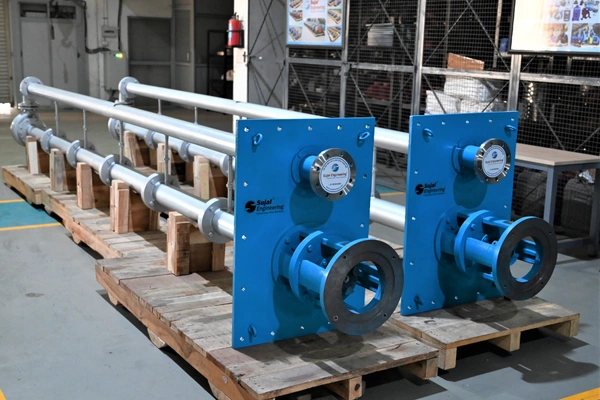
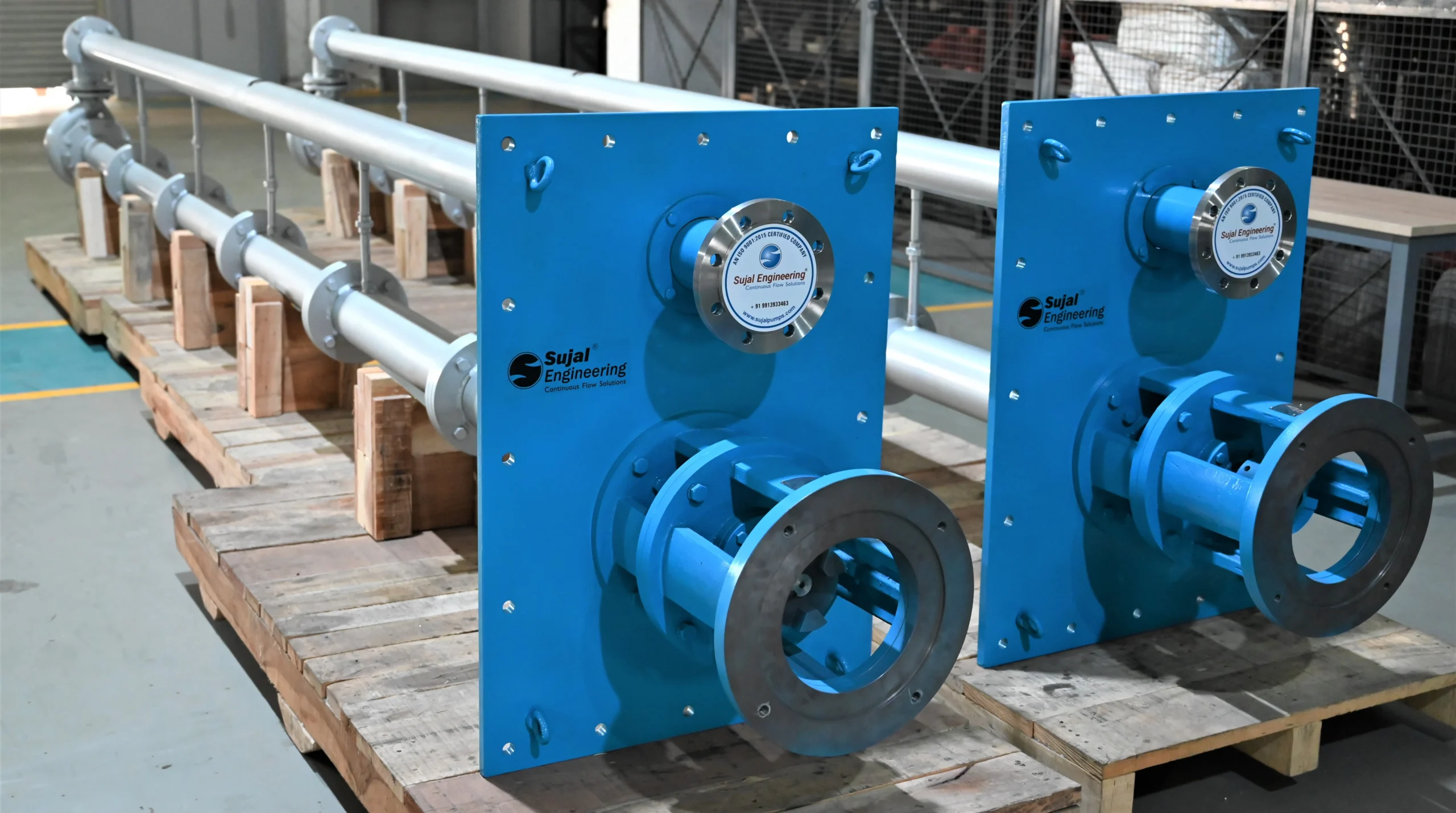
A vertical long shaft pump is a centrifugal pump configured with its impeller and wet-end components submerged at the bottom of a pit or sump, while the drive motor and bearing assembly are mounted at the top, above the liquid level.
The rotating impeller draws liquid upward through the column pipe and discharges it at the surface. The shaft connecting the motor to the impeller runs the full length of the column, which can range from under a meter to well over six meters depending on pit depth.
This vertical working principle gives it a clear advantage over horizontal pumps in deep pit scenarios. There is no priming required, no suction lift limitation, and no risk of the motor being exposed to the liquid being pumped.
The pump essentially sits inside the pit while the operator-accessible components remain safely above ground. This separation of wet end and motor is the fundamental reason these pumps outperform alternatives in deep sump and pit applications.
Why Can’t You Just Use a Horizontal or Submersible Pump for Deep Pits?
This is one of the most common questions engineers faces during pump selection. The short answer is that both horizontal and submersible pumps have real limitations in deep pit environments.
Horizontal centrifugal pumps are excellent for above-ground transfer duties, but they rely on suction lifts. The practical suction lift limit for most horizontal pumps is around 6 to 7 meters under ideal conditions, and real-world performance is often worse. For deep pits, this creates cavitation, noise, and flow loss.
Submersible pumps work well at moderate depths, but their motors are fully submerged, which creates maintenance challenges. When a submersible pump fails, you pull the entire motor out of the liquid. In a pit handling corrosive chemicals, abrasive slurry, or hot process liquids, motor life is dramatically shortened and retrieval for service is both difficult and hazardous.
The vertical long shaft sump pump solves both problems at once. There is no suction lift restriction because the impeller is already at the liquid level. And the motor stays dry and accessible above the pit for routine inspection and service.
Comparison Table 1: Pump Types for Deep Pit Applications
Feature | Horizontal Centrifugal Pump | Submersible Pump | Vertical Long Shaft Pump |
Max Effective Suction Depth | Up to 6-7 m (ideal conditions) | Moderate depth (motor submerged) | 1 m to 6+ m (shaft length customizable) |
Motor Exposure to Liquid | No direct contact | Fully submerged | Motor stays above pit level |
Maintenance Access | Easy (above ground) | Difficult (full pump retrieval) | Easy (motor accessible above ground) |
Corrosion Resistance Options | Limited | Limited | Wide (CI, SS, PP, PVDF) |
Self-Priming | Required | Not required | Not required |
Suitable for Corrosive Liquids | Limited | Not recommended | Yes (material options available) |
Continuous Duty Rating | Good | Moderate (heat buildup risk) | Excellent |
Floor Space Requirement | High | Moderate | Very Low (vertical footprint) |
What Industries Use Vertical Long Shaft Pumps for Deep Pit Applications?
The range of industries that depend on vertical long shaft pump technology is broader than most plant managers realize. If your facility has a collection sump, a process pit, a holding basin, or an underground drainage system, this pump type likely has a place in your operation.
1. Mining and Mineral Processing
Mining operations deal with deep dewatering pits, slurry sumps, and underground water collection points. The ability to handle abrasive, gritty liquids in deep sumps make vertical long shaft pumps essential for continuous mine dewatering. They keep the pit floor clear without risking motor damage from contact with the slurry mix.
2. Chemical and Petrochemical Plants
Chemical process sumps often contain acids, alkalis, and solvents that would rapidly destroy a conventional submersible motor. With a vertical long shaft design, the motor remains above the chemical environment entirely. Polypropylene or PVDF-constructed wet ends handle aggressive media without corrosion, and the pump continues running without interruption.
3. Wastewater Treatment Plants
Wastewater treatment facilities Rely on sump pumps to move influent, sludge, and treated effluent from collection pits to the next stage of treatment. Vertical long shaft pumps handle solid laden wastewater reliably in wet wells that can reach several meters in depth.
4. Textile Mills and Dyeing Units
Dye houses and textile processing units accumulate large volumes of hot, chemically loaded effluent in collection pits. The thermal tolerance and corrosion resistance of properly specified vertical sump pumps make them the reliable choice for this environment.
5. Paper and Pulp Mills
Stock preparation and white-water recovery pits in paper plants contain fibrous, abrasive slurries that most pumps struggle with. Vertical long shaft designs with heavy-duty impellers handle this consistently across long operating cycles.
6. Pharmaceutical Manufacturing
Clean-in-place drainage sumps and process waste collection points in pharmaceutical plants require pumps that resist contamination, handle cleaning chemicals, and can be built to the hygienic standards the industry demands.
Serving Multiple Industries from a Single Pump Platform?
Visit Sujal Engineering to discover how our Vertical Long Shaft Sump Pumps are customized to meet the unique process, material, and performance requirements of different industries.
Explore Industry-Specific SolutionsWhat Are the Key Design Features That Make These Pumps Ideal for Deep Pits?
Understanding the design elements of a vertical long shaft pump helps procurement managers and engineers make a more confident specification. Here are the features that matter most.
1. Variable Shaft Length
The shaft is the defining feature. It can be engineered to match the exact depth of your pit, whether that is 1.5 meters or 6 meters. This customization eliminates the compromise that comes with selecting an off-the-shelf pump that only approximately fits your installation depth.
2. Bearing Arrangement for Long Shafts
As shaft length increases, the risk of vibration and shaft deflection increases too. Quality vertical long shaft pumps use intermediate steady bearings along the column pipe to stabilize the shaft, reduce vibration, and extend bearing and seal life. This is particularly important in continuous duty applications.
3. Material Selection for Corrosion Resistance
The wet-end components, impeller, casing, and column pipe can all be specified in materials suited to the process liquid. Options include cast iron for general service, stainless steel for mildly corrosive or hygienic applications, polypropylene for highly corrosive acidic environments, and PVDF for extreme chemical resistance.
Sujal Engineering offers dedicated Polypropylene Pumps and PVDF Pumps designed for exactly these chemically aggressive pit applications.
4. Open or Semi-Open Impeller Options
For pits that accumulate solids, grit, or fibrous material alongside the liquid, semi-open or open impellers prevent clogging while maintaining consistent flow. This matters enormously in mining sumps, wastewater pits, and paper stock recovery installations.
5. Mechanical Seal or Gland Packing
Depending on the liquid type and pressure, the shaft seal can be specified as either a mechanical seal for clean or mildly contaminated liquids, or gland packing for more abrasive or particle-laden media. Choosing the wrong seal type is one of the most common causes of early pump failure in pit applications.
Comparison Table 2: Material Options for Vertical Long Shaft Pump Wet Ends
Liquid Type | Recommended Material | Corrosion Resistance | Temperature Range | Typical Industry |
Clean or Mildly Dirty Water | Cast Iron | Moderate | Up to 80°C | General Industrial, Water Treatment |
Mild Acids / Alkalis | Stainless Steel (SS316) | High | Up to 120°C | Pharma, Food Processing |
Strong Acids (HCl, H2SO4) | Polypropylene (PP) | Very High | Up to 70°C | Chemical, Textile, Electroplating |
Highly Aggressive Chemicals | PVDF | Excellent | Up to 100°C | Petrochemical, Specialty Chemical |
Abrasive Slurry | Hard Metal / Rubber Lined | Moderate to High | Up to 60°C | Mining, Ceramic, Paper & Pulp |
Not Sure Which Material Is Right for Your Pit Liquid?
Talk to our experts at Sujal Engineering and get a material specification recommendation based on your actual process conditions, fluid characteristics, and operating environment.
Speak with Our ExpertsHow Deep Can a Vertical Long Shaft Pump Effectively Operate?
The effective operating depth of a vertical long shaft pump depends on the shaft and column design, the bearing support arrangement, and the type of liquid being handled. In standard industrial configurations, these pumps operate reliably at depths ranging from 1 meter to approximately 6 meters.
For applications requiring deeper reach, multi-stage configurations or extended shaft designs with additional intermediate bearing supports can push this depth further. Mining dewatering sumps and large industrial collection pits often fall in the 4-to-6-meter range.
The critical engineering consideration at greater depths is shaft stability. Without adequate intermediate bearing support, long unsupported shafts develop vibration and premature wear. This is why the bearing layout in the column pipe is not just a detail but a core reliability factor.
For most industrial deep pit applications, including chemical collection sumps, textile effluent pits, and mining drainage wells, a properly engineered vertical long shaft sump pump from a reputable manufacturer will cover the full depth range without compromise.
What Are the Maintenance Advantages of Vertical Long Shaft Pumps in Deep Pit Installations?
Maintenance engineers consistently report that the above-ground motor is the single biggest operational advantage of vertical long shaft pumps in pit applications. Here is what that means in practice.
- Routine Inspection Is Simple: The motor, coupling, and upper bearing housing are all accessible at ground level. Vibration checks, temperature monitoring, and lubrication can all be done without entering the pit or using confined space procedures.
- Mechanical Seal or Gland Access: These components are located at the top of the column, at or near pit level, which means seal replacement does not require removing the pump from the pit. This reduces downtime significantly.
- Impeller and Wet-End Service: When the impeller or casing needs inspection or replacement, the pump column is raised from the pit. This is a straightforward procedure compared to retrieving a fully submerged motor pump that may be covered in process liquid or sludge.
- Reduced Electrical Risk: Because the motor is positioned above the liquid and is not sealed inside a submersible housing, electrical insulation degradation from moisture intrusion is far less common. Motor life is typically extended when compared to equivalent submersible pumps in the same application.
For plant managers calculating total cost of ownership rather than just purchase price, the maintenance economics of vertical long shaft pumps consistently deliver a better return over a five-to-seven-year operational cycle.
How Do You Select the Right Vertical Long Shaft Pump for Your Deep Pit?
Selecting the right pump for a deep pit application involves more than matching flow rate and head. Here is a practical checklist for procurement managers and maintenance engineers.
1. Define the Pit Depth Accurately: Measure from the pump discharge point to the lowest liquid level in the pit. This gives the shaft length requirement. Add a small safety margin for installation tolerance.
2. Identify the Liquid Composition: Is the liquid clean water, chemically contaminated effluent, abrasive slurry, or a combination? This determines the material specification for the wet end.
3. Determine the Required Flow Rate and Head: Calculate the volume that needs to be removed per hour and the total head including static lift, friction losses, and any back pressure in the discharge system.
4. Specify the Duty Cycle: Is the pump required for continuous 24/7 operation or intermittent duty? This affects motor sizing, bearing selection, and seal type.
5. Consider Installation Constraints: Is the pit covered or open? Is there a flange or sump cover that limits the column diameter? What is the available space above the pit for the motor and drive?
6. Choose the Seal Type: Mechanical seals suit cleaner liquids. Gland packing suits liquids with suspended solids or abrasive content.
7. Confirm Material Compatibility: Run a chemical compatibility check between the process liquid and the proposed wet-end material before finalizing the specification.
Following this process produces a specification that matches the pump to the application rather than forcing the application around a standard product.
Use this checklist on your next project. Contact Sujal Engineering’s team to review your requirements and receive a detailed pump recommendation tailored to your deep pit conditions.
Real-World Application: Vertical Long Shaft Pump in a Chemical Effluent Pit
Consider a chemical plant handling mixed acid effluent in a collection sump that sits 4 meters below the plant floor. A horizontal pump would struggle with a suction lift and corrode rapidly. A submersible pump would expose its motor to acid fumes and liquid ingress. A conventional centrifugal process pump would simply not reach the liquid.
The solution in this case is a polypropylene vertical long shaft pump with a 4-meter shaft, open impeller for any solids content, and a mechanical seal rated for acid service. The motor sits above the pit, the column pipe is fully sealed against fume ingress, and the pump runs continuously without the corrosion or motor failure issues seen with alternative configurations.
This is exactly the kind of scenario Sujal Engineering’s Vertical Long Shaft Sump Pump is engineered to solve, bringing together the right materials, shaft design, and drive arrangement for demanding industrial environments.
Conclusion: The Right Pump for the Depth of the Challenge
Deep pit liquid handling is not a problem you can solve with a generic pump catalog selection. It requires a design philosophy that separates the motor from the liquid, reaches the depth of the sump without suction limitations, resists the chemical nature of whatever is being pumped, and remains accessible for maintenance without halting production.
Vertical long shaft pumps meet every one of these requirements. That is not a claim based on specifications alone; it is a result validated across decades of real industrial use in mining pits, chemical effluent sumps, textile effluent basins, pharmaceutical drainage pits, and wastewater collection systems around the world.
Sujal Engineering has developed its Vertical Long Shaft Sump Pump range with exactly this kind of industrial reality in mind. Every pump we build is engineered to match your specific pit depth, liquid composition, and operational demands. Whether you need polypropylene construction for acid service, stainless steel for hygienic applications, or heavy-duty cast iron for general industrial use, our team will help you specify the right solution without compromise.
Get in touch with our team at Sujal Engineering to discuss your deep pit pumping requirements and receive an application-specific recommendation from our experts.
Frequently Asked Questions About Vertical Long Shaft Pumps for Deep Pit Applications
1. What is the maximum depth a vertical long shaft pump can handle?
Standard vertical long shaft sump pumps are designed for depths of 1 meter to approximately 6 meters. Extended shaft designs with additional intermediate bearing supports can operate at greater depths. The exact limit depends on shaft diameter, bearing spacing, and the specific pump model selected.
2. Can vertical long shaft pumps handle corrosive chemicals in deep pits?
Yes. The wet-end components, including the impeller, casing, and column pipe, can be manufactured in polypropylene, PVDF, or stainless steel to resist acids, alkalis, and other corrosive process liquids. The motor remains above the chemical environment, further protecting the drive components.
3. Is a vertical long shaft pump the same as a vertical turbine pump?
They are related but not identical. A vertical turbine pump typically refers to a multi-stage design used for deep well or high-head applications. A vertical long shaft sump pump is optimized for industrial sump and pit applications at moderate head and depth. Both share the vertical orientation and above-ground motor configuration.
4. How often does a vertical long shaft pump need maintenance?
Routine inspections should be carried out as part of a scheduled preventive maintenance program, typically monthly for bearings and seals and quarterly for impeller wear checks. The above-ground motor makes these inspections far easier and safer than with submersible alternatives.
5. Can these pumps handle solids or slurry in the pit?
Yes, with the correct impeller selection. Semi-open or open impellers are used for pits with suspended solids, grit, or fibrous content. For heavier slurry duty, hard-metal or rubber-lined wet ends are specified. Always confirm the solids concentration and particle size with the pump manufacturer.
6. What is the difference between a vertical long shaft sump pump and a submersible sewage pump?
A submersible sewage pump has its motor sealed below the liquid level. A vertical long shaft sump pump has its motor above the pit, connected to the submerged impeller via a long shaft. The vertical long shaft design is preferred for corrosive liquids, high-temperature media, and situations where motor accessibility is important.
7. Are vertical long shaft pumps energy efficient?
Yes. Because the impeller is positioned directly at the liquid level, there is no suction lift energy loss. Combined with efficient motor sizing and impeller design, these pumps deliver high hydraulic efficiency for continuous duty deep pit applications. Properly selected pumps also reduce energy wastage from cavitation and recirculation that affect improperly specified alternatives.
8. How do I choose between polypropylene and stainless-steel construction for my pit pump?
Choose polypropylene for strongly acidic or alkaline environments where the pH is below 2 or above 12. Choose stainless steel for mildly corrosive liquids, hygienic applications, or where structural strength at elevated temperatures is needed. For extremely aggressive chemicals, PVDF offers superior resistance to a broader range of compounds.