
Industrial Pumps for Fertilizer & Pesticide Processing: What You Need to Know
Industrial Pumps for Fertilizer & Pesticide Processing: What You Need to Know
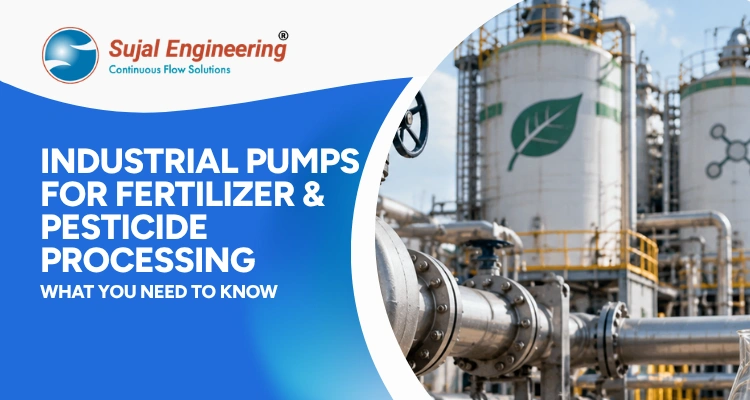
Fertilizer and pesticide processing pumps move some of the most demanding fluids in industrial manufacturing: concentrated acids, ammonium and phosphate solutions, abrasive slurries, and viscous or toxic formulation chemicals. Choosing the wrong pump type or material typically shows up as premature wear, seal failure, or unplanned downtime. The right pump is selected around your actual fluid properties, duty point and solids content, not around a generic “chemical pump” label. This guide covers which pump types suit different fertilizer and pesticide duties, how material selection works, and what data your team should have ready before requesting a quotation.
Key Takeaways
- Fertilizer and pesticide processing involves corrosive acids and alkalis, abrasive slurries, and sometimes viscous or toxic liquids, so pump material and configuration must match the exact fluid, concentration and temperature, not just the general chemical category.
- Sujal Engineering’s chemical process, polypropylene, PVDF, slurry transfer, gear and AODD pump families each suit a different stage of fertilizer and pesticide handling, from controlled acid transfer to granulation slurry handling and drum-level formulation transfer.
- A pump’s published maximum flow and maximum head are not a single guaranteed duty point. Final selection needs your actual flow, head, temperature and fluid data checked against the current performance curve.
- Material compatibility can never be assumed from a material name alone. Concentration, temperature, solids content and contaminants all influence whether a material is actually suitable.
- Hazardous-area or ATEX requirements are configuration-specific and must be confirmed against the exact motor, area classification and fluid involved, not treated as a default feature.
- Sending complete fluid and duty-point data to Sujal Engineering’s team helps narrow down the correct pump family and configuration faster.
What Makes Fertilizer and Pesticide Fluids Difficult to Pump?
Fertilizer and pesticide plants rarely handle a single, simple liquid. A typical process line can involve sulfuric or phosphoric acid transfer or controlled process feeding, ammonium sulfate or DAP/MAP solutions, phosphate rock slurry, viscous micronutrient blends, and pesticide active-ingredient concentrates, often within the same facility.
Each of these presents a different pumping challenge:
- Corrosiveness. Acids, alkalis and many pesticide formulations attack unsuitable metals and elastomers over time, particularly at higher concentration and temperature.
- Abrasiveness. Phosphate rock slurry, granulation slurry, liquid recycle streams and gypsum byproduct slurries can carry solids that erode impellers, casings and seals.
- Viscosity. Some liquid fertilizer blends and micronutrient suspensions are thicker than water, which affects how a centrifugal pump performs against its curve.
- Toxicity and containment. Pesticide concentrates and certain fertilizer intermediates require reliable sealing and, in some cases, hazardous-area consideration.
- Temperature. Reaction and neutralization stages can run hot, which narrows the list of suitable elastomers and non-metallic materials.
Because these factors combine differently at every stage of the process, a single “fertilizer pump” does not exist. Instead, different pump types and materials are matched to specific duties within the plant.
Which Types of Industrial Pumps Are Used in Fertilizer and Pesticide Processing?
Centrifugal Chemical Process Pumps for Acid Transfer and Process Feeding
Sujal Engineering’s SCP Series Chemical Process Pump is built for general chemical transfer duties, such as compatible acid or alkali transfer, reactor feed and inter-stage transfer. Current published figures cover capacity up to 48 m³/hr, head up to 60 m and temperature up to 300°C, with material of construction options that can include SS304/316, SS304L/316L, Alloy 20 and CD4MCU, depending on the current specification sheet. For higher-volume transfer duties in fertilizer plants, the larger SCPP Series Centrifugal Process Pump (ISO 2858 dimensional reference, up to 2200 m³/hr capacity on current published data) may be the more relevant family to evaluate. Suitability for UAN, ammonium nitrate solution or any other named fluid must be confirmed using the exact composition, concentration, temperature, solids content, seal arrangement and complete wetted construction.
Polypropylene and PVDF Pumps for Non-Metallic Chemical Handling
Where metallic construction is not the preferred route for a given acid, alkali or pesticide formulation, the SPP/SPPL Series Polypropylene Pump and SPVDF Series PVDF Pump cover non-metallic chemical transfer. SPP/SPPL currently publishes temperature limits up to 80°C, while SPVDF extends to approximately 150°C. Material compatibility with your specific chemical, concentration and temperature should always be confirmed rather than assumed from the “PP” or “PVDF” label alone, since current M.O.C. tables for these series can list both materials together.
Need a Non-Metallic Pump for a Corrosive Process Fluid?
Explore Sujal Engineering’s PP and PVDF pump ranges for compatible chemical-transfer applications. Final selection should consider the exact chemical, concentration, temperature and complete wetted construction.
View PP and PVDF Pump OptionsSlurry Transfer Pumps for Phosphate Rock and Granulation Duties
Phosphate-based fertilizer manufacturing generates abrasive slurries at multiple stages, including rock beneficiation, acidulation, granulation slurry handling and other liquid recycle service. The SSTP Series Horizontal Slurry Transfer Pump is built for solids-laden transfer, with current construction options including carbon steel, high chrome and SS316L. Slurry pump selection depends on particle size, hardness, specific gravity and solids concentration, not on the word “slurry” alone.
Rotary Gear Pumps for Viscous Liquid Fertilizers
Some clean liquid fertilizer blends may be too viscous for efficient centrifugal transfer. The SGP Series Rotary Gear Pump is a positive-displacement candidate for clean, compatible and lubricating viscous liquids without abrasive suspended solids, where flow depends on displacement and speed rather than a centrifugal curve. Viscosity at actual operating temperature, along with appropriate overpressure protection, needs to be defined before sizing. Micronutrient suspensions require a separate solids assessment because particles can wear or obstruct close gear clearances and may call for a slurry-capable pump instead.
Air-Operated Diaphragm Pumps for Batch Dispensing and Drum Transfer
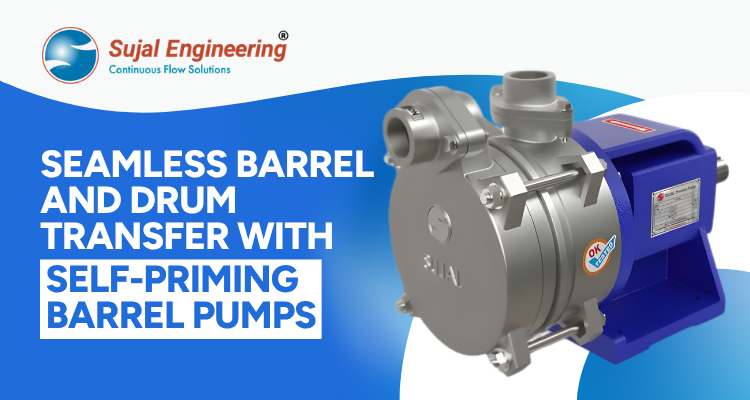
Pesticide formulation transfer and batch dispensing frequently happen at smaller volumes, from drums or totes, where self-priming and intermittent-duty capability can matter more than raw flow. The SAOD-PP and SAOD-SS air-operated diaphragm pumps use compressed air instead of an electric motor at the pump. They still require a continuous, correctly sized compressed-air supply while operating. Suitability depends on the wet-end and diaphragm material matching the actual active ingredient and carrier fluid, and hazardous-area suitability must be confirmed for the complete selected configuration.
How Do You Select the Right Pump Material for Corrosive Fertilizer and Pesticide Chemicals?
Material selection is where most fertilizer and pesticide pump decisions succeed or fail. A material name on a datasheet is a starting point, not a guarantee. The same stainless steel grade that resists one dilute acid can fail quickly in a more concentrated or hotter version of the same chemical.
Before finalizing material of construction, confirm:
- The exact chemical or chemical mixture, including any additives
- Concentration, at both normal and worst-case operating points
- Operating and ambient temperature range
- Presence of solids, chlorides or other contaminants
- Whether the fluid is continuous-duty or intermittent
- Elastomer and seal-face compatibility, not just the wetted metal or plastic
Potential candidates for fertilizer and pesticide duties include stainless steel or Alloy 20 metallic construction on the SCP/SCPP families and non-metallic PP/PVDF construction on the SPP/SPPL and SPVDF families. Selection should not be reduced to casing material alone. The complete wetted construction, seal faces, elastomers, shaft sleeves, fluid velocity, solids and operating temperature must also be evaluated. Where the exact chemical data is not yet confirmed, treat any material recommendation as provisional until it is checked against current compatibility references and, where needed, Sujal Engineering’s application team.
What Role Do Slurry and Diaphragm Pumps Play in Granulation, Blending and Formulation?
Granulation and blending stages in fertilizer manufacturing can move coating slurries, binder solutions and other liquid recycle streams that carry meaningful solids loads. Selecting a slurry pump for this duty means specifying particle size, hardness, specific gravity and solids concentration, since these factors drive wear rate on the impeller, casing and seal far more than the nominal flow rate does.
At the formulation and packaging end, particularly for pesticide concentrates, air-operated diaphragm pumps offer a practical way to transfer or batch-dispense fluid from drums and totes without a flooded suction or an electric motor at the pump. Their self-priming action and tolerance for intermittent duty suit batch operations, though continuous compressed-air availability, air pressure, suction lift and wet-end material still need to match the specific fluid before a model is confirmed.
Explore Sujal Engineering’s chemical and non-metallic pump range to compare construction options for your process fluid.
Not Sure Which Pump Fits Your Fertilizer or Pesticide Process?
Share your fluid properties, solids content, viscosity, operating temperature, flow and head with Sujal Engineering for application-based pump guidance.
Discuss Your Pump RequirementPump Comparison for Fertilizer and Pesticide Duties
| Pump Type | Typical Fertilizer/Pesticide Duty | Construction Focus | Key Selection Consideration |
| SCP Chemical Process Pump | Compatible chemical transfer, reactor feed and controlled process feeding | Metallic options such as SS304/316, Alloy 20 and CD4MCU | Confirm the exact chemical, concentration, temperature, seals and complete wetted construction |
| SPP/SPPL Polypropylene Pump | Potential candidate for lower-temperature corrosive-liquid transfer | Polypropylene, with PVDF referenced in the current M.O.C. table | Confirm the actual temperature limit, complete wet-end scope and chemical compatibility |
| SPVDF PVDF Pump | Potential candidate for higher-temperature non-metallic chemical transfer | PVDF M.O.C. listed for the series | Confirm all wetted components, seal arrangement, elastomers and the named chemical duty |
| SSTP Slurry Transfer Pump | Phosphate rock slurry, granulation slurry and gypsum byproduct slurry | Carbon steel, High Chrome and SS316L options | Requires particle size, hardness, specific gravity, solids concentration and settling data |
| SGP Rotary Gear Pump | Clean, compatible and lubricating viscous liquid transfer without abrasive suspended solids | CI/WCB construction | Confirm viscosity at operating temperature, solids absence and overpressure protection |
| SAOD-PP / SAOD-SS AODD Pump | Pesticide concentrate transfer, batch dispensing and drum/tote unloading | PP/PVDF or SS316/SS304 options, subject to exact configuration | Confirm air supply, wet-end, diaphragm compatibility and any hazardous-area requirements |
What Are Common Pump Selection Mistakes in Fertilizer and Pesticide Plants?
- Treating the maximum published flow and head as one duty point. A pump’s series maximums are envelope values, not a guaranteed simultaneous performance combination. Selection needs the actual pump curve checked against your required flow and head together.
- Assuming a material name proves chemical resistance. “Stainless steel” or “PVDF” is not a compatibility guarantee on its own; concentration and temperature change the outcome.
- Underestimating solids in slurry and recycle streams. Particle size, hardness and concentration drive wear rate more than flow rate does.
- Ignoring viscosity in liquid fertilizer transfer. A centrifugal pump sized on water-like assumptions can underperform once actual fluid viscosity is factored in.
- Skipping suction condition checks. Available NPSH, suction lift and piping layout affect cavitation risk regardless of how well the rest of the pump is specified.
- Assuming hazardous-area suitability by default. ATEX or flameproof requirements depend on the specific motor, area classification and fluid, and must be confirmed rather than assumed.
What Maintenance and Safety Considerations Apply to Fertilizer and Pesticide Pumps?
Pumps in corrosive and abrasive fertilizer or pesticide service generally need closer monitoring than clean-water applications. Useful checks include:
- Seal leakage and seal-face condition, particularly on corrosive or toxic duty
- Bearing temperature, noise and vibration trends
- Impeller and casing wear on slurry and recycle-stream duties
- Suction-line integrity and air-ingress checks where priming issues appear
- Mechanical seal or elastomer degradation after extended exposure to concentrated chemicals
Where a fluid is toxic, flammable or handled in a classified hazardous area, the full pump-set documentation, including motor certification, earthing and area classification, should be verified against the specific installation rather than assumed from general product literature. Sujal Engineering’s current site displays ISO, CE, ISO 14001:2015, ATEX and ISO 45001 credentials, and product-level scope should be confirmed for any hazardous-area application.
What Information Should You Send for a Pump Selection or Quotation?
A faster, more accurate recommendation typically depends on having the following ready:
- Application and specific fluid (including concentration and any solids)
- Required flow rate and head, or discharge pressure
- Operating and ambient temperature
- Specific gravity and viscosity at operating temperature
- Solids content, particle size and hardness, if applicable
- Suction condition (flooded suction, suction lift, available NPSH inputs)
- Preferred material of construction, if already known
- Motor voltage, frequency, phase, and any hazardous-area classification
- Duty cycle (continuous, intermittent, batch) and quantity required
Send your fluid, flow, head, temperature and solids data for a technical pump selection or quotation, and Sujal Engineering’s team can narrow the recommendation to the right series and configuration.
Ready to Request a Pump Selection or Quotation?
Send your application, fluid, flow, head, temperature, suction conditions and motor requirements to Sujal Engineering to help evaluate the appropriate pump series and configuration.
Request a Pump QuotationWhy Choose Sujal Engineering for Fertilizer and Pesticide Pump Requirements?
Sujal Engineering has manufactured industrial pumps in Ahmedabad, India since 2009, with a live product range that spans metallic chemical process pumps, non-metallic PP/PVDF pumps, slurry transfer pumps, gear pumps and AODD pumps. Production is supported by current in-house machining, impeller dynamic balancing, pump and motor alignment, and performance-testing capability, as detailed on Sujal’s infrastructure page. Standard and customized pump configurations are supported for application-specific fertilizer and pesticide duties, and pumps are supplied domestically and through Sujal’s export operations to international agrochemical buyers.
Conclusion
Fertilizer and pesticide processing spans corrosive, abrasive and sometimes viscous fluids, and each process stage typically calls for a different pump type and material rather than one generic “chemical pump.” Match the material, check the actual duty point against the pump curve, and confirm solids and temperature data before finalizing a model. Sujal Engineering’s chemical process, non-metallic, slurry, gear and AODD pump range, backed by in-house manufacturing and application-specific engineering support, can help you land on the right configuration. Share your fluid, flow, head, temperature and solids data with the team to start the selection.
Swap this in place of the longer paragraph; everything else in the blog stays the same.
Frequently Asked Questions
1. Which pump is best for transferring corrosive fertilizer chemicals?
It depends on the specific chemical, concentration, temperature, contaminants and complete wetted construction. Metallic SCP or SCPP configurations and non-metallic PP or PVDF configurations may be evaluated as candidates, but the series name or casing material alone does not confirm compatibility.
2. Can a centrifugal pump handle phosphate rock slurry?
A centrifugal slurry pump such as the SSTP series can handle abrasive slurries, but the exact model and material need to be matched to particle size, hardness, specific gravity and solids concentration in your process stream.
3. What is the difference between PP and PVDF pumps for pesticide handling?
Polypropylene (PP) and PVDF are both non-metallic materials used in chemical pump construction, but they differ in temperature tolerance and chemical resistance profile. Current SPP/SPPL specifications list a lower temperature ceiling than SPVDF, so the choice depends on your operating temperature and the specific fluid involved.
4. Do fertilizer and pesticide plants always need ATEX-rated pumps?
No. ATEX or flameproof requirements depend on the specific fluid, area classification and installation, not on the industry alone. This should be confirmed for each application rather than assumed as a default.
5. How do you prevent premature pump corrosion in agrochemical processing?
Match the wetted material, seal and elastomer selection to the exact chemical, concentration and temperature, and monitor seal and material condition over time, since exposure conditions can change as concentrations or temperatures shift during operation.
6. Can AODD pumps run dry during pesticide transfer?
Air-operated diaphragm pumps generally tolerate intermittent dry running better than centrifugal pumps, but exact dry-run capability depends on the specific model and manual. Confirm this against the current product documentation before relying on it operationally.
7. What information does Sujal Engineering need for a fertilizer or pesticide pump quotation?
Typically the fluid and its concentration, required flow and head, operating temperature, specific gravity and viscosity, solids content if present, suction conditions, and any hazardous-area or motor requirements.
8. Does Sujal Engineering supply pumps for fertilizer and agrochemical plants outside India?
Yes. Sujal Engineering manufactures in Ahmedabad and currently supplies pumps to international buyers through its export operations, with its homepage stating a reach of 40+ countries.